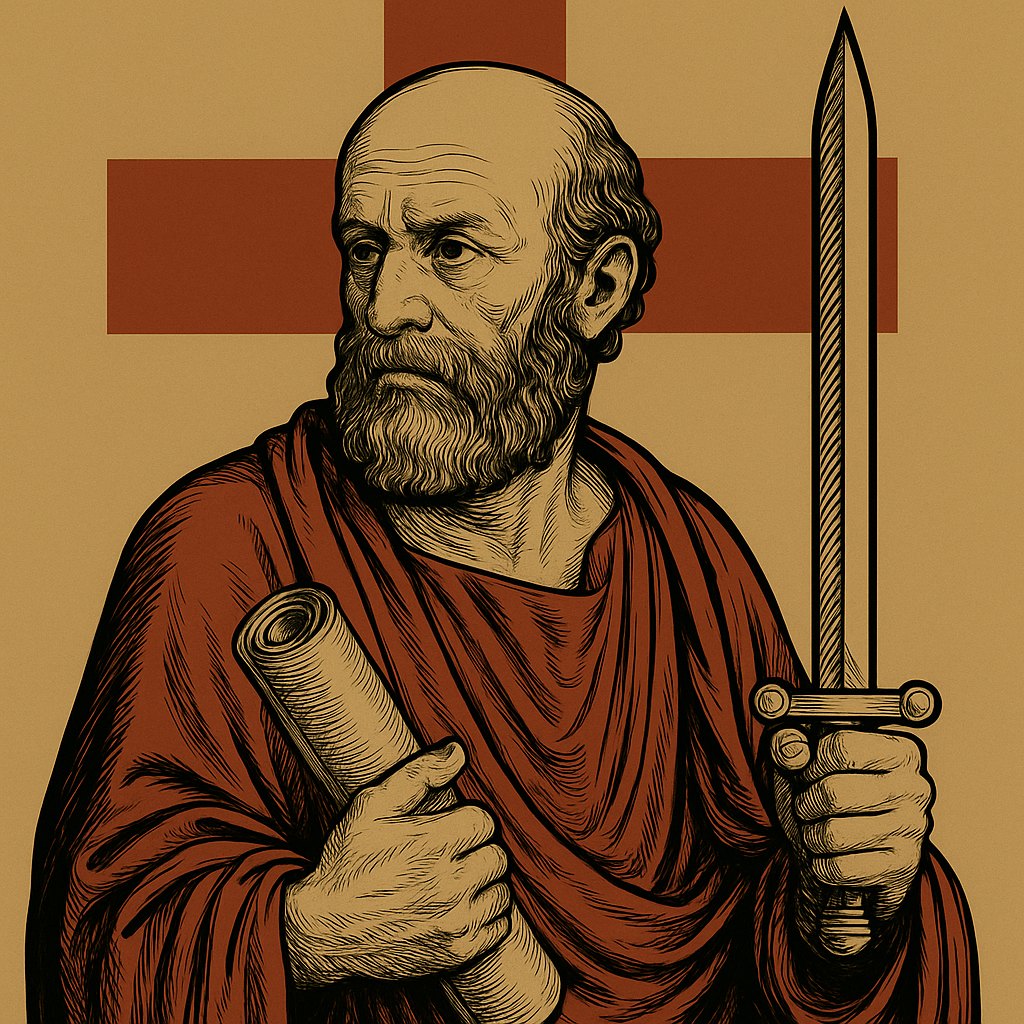
Christianity today is identified with Jesus Christ, known in Islamic discourse as the Prophet ʿĪsā ibn Maryam (ʿalayhi al-salām, peace be upon him). A close reading of the New Testament shows that most of the doctrine of modern Christianity came from another source: a Jew named Saul of Tarsus, later known as Paul.
ʿĪsā ibn Maryam in the Qurʾān
For Muslims, ʿĪsā al-Masīḥ (c. 4 BCE to c. 33 CE) was a prophet of the Children of Israel, sent by God as His messenger to confirm the Torah and to deliver a new revelation called the Injīl.1 He also brought glad tidings of the last prophet and messenger, Muḥammad (ṣallā Allāh ʿalayhi wa-sallam, peace and blessings be upon him).2 The Injīl he brought was later altered by human hands.3
ʿĪsā ibn Maryam performed miracles as the prophets before him had, each by the permission of God. He raised the dead and healed the leper.4 His birth without a father was itself an act of the divine will.5
When the religious authorities of his people sought to kill him, God saved him. The Qurʾān states that his enemies neither killed nor crucified him, and that it was only made to appear so to them.6
Two kinds of love
Muslims love ʿĪsā ibn Maryam as one of the twenty-five messengers named in the Qurʾān, in whom every Muslim is obliged to believe. His miracles are proof that he was a messenger bringing the truth.
Christians also profess love for Jesus. They express it by making him one of the three persons of the Godhead in the doctrine of the Trinity, together with a series of further claims that sound reason struggles to accept. The two communities revere the same name and mean different things by it.
The divergence has a source. Modern Christianity rests entirely on the thought of Paul; Paul per se is the founder, and it stands or falls with him.
A founder by any measure
Students of religion know Paul well. Michael Hart’s ranking of the most influential people in history includes him largely for his part in shaping Christian theology.7
Western scholars have gone further. Hyam Maccoby and Gerd Lüdemann both argue that Paul, and no one before him, created the Christianity that exists today.8
On that point the Muslim case and theirs meet. Paul’s teaching departed from the original message of ʿĪsā ibn Maryam, and that departure is the first count against him.
- Qurʾān, al-Māʾidah 5:46. ↩
- Qurʾān, al-Ṣaff 61:6. ↩
- cf. Qurʾān, al-Baqarah 2:79. ↩
- Qurʾān, Āl ʿImrān 3:49. ↩
- Qurʾān, Maryam 19:16–21. ↩
- Qurʾān, al-Nisāʾ 4:157. ↩
- Michael H. Hart, The 100: A Ranking of the Most Influential Persons in History (New York: Hart Publishing Company, 1992). ↩
- cf. Hyam Maccoby, The Mythmaker: Paul and the Invention of Christianity (HarperCollins, 1987); Gerd Lüdemann, Paul: The Founder of Christianity (Amherst, NY: Prometheus Books, 2001). ↩