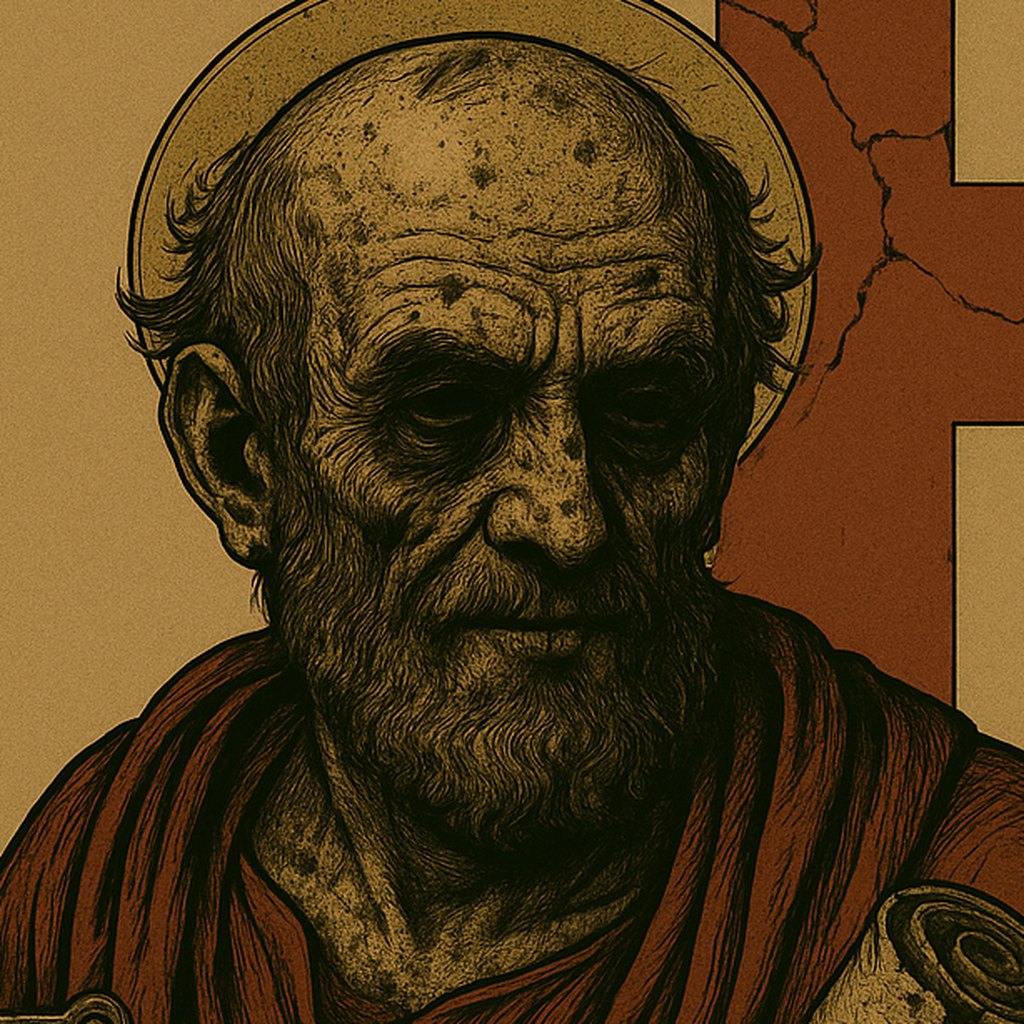
The teaching of ʿĪsā ibn Maryam (ʿalayhi al-salām, peace be upon him) on tawḥīd (توحيد, “the oneness of God”) was a complete rejection of the existence of many gods. A teaching of that kind was hard for the Romans to accept, above all among the Gentiles.6 For a man as sincere and steadfast as Barnabas, living the way of life ʿĪsā ibn Maryam taught among the Romans, without compromise or any attempt to adapt to their culture, must have been a heavy responsibility.
Barnabas held firmly to the belief that ʿĪsā ibn Maryam knew his Creator did not want the laws of the Torah reduced or altered in the smallest degree.7 So he stayed loyal to the teaching he had received directly from him. Paul did not agree.
Tension over the law
After more than two years of preaching among the Gentiles, Paul and Barnabas returned to Antioch in Syria and reported to the congregation on what they claimed as the work of God.8 The rapid growth among uncircumcised Gentiles began to create a new tension, one that had flared before but was now sharpening.9
Many Jews held that Gentiles had to be circumcised and submit to the law of the Torah before they could be fully accepted into the covenant people. The tension led to the need for a great council in Islamicjerusalem to resolve the crisis that was beginning to threaten the unity of the early church.10
The central question at the Jerusalem Council was whether Gentiles who embraced the teaching of ʿĪsā ibn Maryam had to be circumcised and keep the law of the Torah.11 Paul insisted that the requirement was unnecessary, while disciples such as Peter and Barnabas defended the basic requirement that the law be kept.
Peter spoke at the council to recall that God had shown his acceptance of Gentiles through the Cornelius episode. He did not, however, cancel the principle of the law as a whole.12
James then announced a compromise: Gentiles were released from circumcision and remained bound to avoid idolatry, blood, the meat of strangled animals and fornication.13 That shows the original teaching of ʿĪsā ibn Maryam, founded on the law, was kept as the basis, even as it was adapted for preaching to other peoples.
19Wherefore my sentence is, that we trouble not them, which from among the Gentiles are turned to God: 20But that we write unto them, that they abstain from pollutions of idols, and from fornication, and from things strangled, and from blood.1
Paul, however, interpreted the decision freely and developed the idea that the law of the Torah no longer bound anyone, the Jews included. The clash between Paul and the disciples therefore arose from a deep difference of principle, and from more than a difference of approach.
Playing the Jew in the Temple
One event that exposes Paul’s plain hypocrisy took place when he returned to Islamicjerusalem after his missions in Gentile territory. As Acts records,14 James and the elders told him that many Jews had heard that Paul taught the Jews of the Diaspora to abandon the law of Moses and the customs of their fathers. To put an end to the rumor, James told Paul to join four men under a vow, undergo the rite of purification in the Temple with them and pay the cost of their offerings.
20And when they heard it, they glorified the Lord, and said unto him, Thou seest, brother, how many thousands of Jews there are which believe; and they are all zealous of the law: 21And they are informed of thee, that thou teachest all the Jews which are among the Gentiles to forsake Moses, saying that they ought not to circumcise their children, neither to walk after the customs. 22What is it therefore? the multitude must needs come together: for they will hear that thou art come. 23Do therefore this that we say to thee: We have four men which have a vow on them; 24Them take, and purify thyself with them, and be at charges with them, that they may shave their heads: and all may know that those things, whereof they were informed concerning thee, are nothing; but that thou thyself also walkest orderly, and keepest the law. 25As touching the Gentiles which believe, we have written and concluded that they observe no such thing, save only that they keep themselves from things offered to idols, and from blood, and from strangled, and from fornication. 26Then Paul took the men, and the next day purifying himself with them entered into the temple, to signify the accomplishment of the days of purification, until that an offering should be offered for every one of them.2
Without protest, Paul followed the instruction and pretended to keep the law. De jure he kept it that day in the Temple; de facto he had already abolished it in his letters, where he states repeatedly that the Torah is finished and circumcision no longer required.15
The act shows that Paul was willing to adjust his rhetoric to context, and beyond that, to perform a ritual he rejected to win the trust of the local Jewish community. Small wonder that some accuse him of playing the Jew before Jews and the Gentile before Gentiles,16 the modus operandi he describes himself in 1 Corinthians 9, and a moral relativism that opens the door wide to manipulation of the teaching.
That extreme interpretation set off a worsening tension between Paul and the disciples. Soon afterward, the personal tension between Barnabas and Paul reached its peak.
The parting with Barnabas
Acts relates that Barnabas wanted to bring John, called Mark, with them. Paul disagreed, because Mark had left them in Pamphylia.17
The quarrel drove them to part and go their separate ways.18 Acts records:
39And the contention was so sharp between them, that they departed asunder one from the other: and so Barnabas took Mark, and sailed unto Cyprus; 40And Paul chose Silas, and departed, being recommended by the brethren unto the grace of God.3
The quarrel between Barnabas and Paul reflects a basic difference in their approach to the teaching of ʿĪsā ibn Maryam. Barnabas held to the original message of tawḥīd and the law, as preserved by the Urgemeinde, the original community of the followers of ʿĪsā ibn Maryam in Islamicjerusalem, led by James and supported by Peter.
Paul leaned ever further toward adapting the teaching to pagan culture to attract Gentile followers. That change was a theological deviation, and it ended in a great split in the body of the early church.
Peter, regarded as the chief leader of the disciples, stressed obedience to the Jewish law. Acts records his preaching:
40And with many other words did he testify and exhort, saying, Save yourselves from this untoward generation.4
That approach differs from Paul’s looser attitude to the obligations of Jewish law.19
Open conflict with Peter
At the same time Paul was in open dispute with Cephas (Peter), as his letter to the Galatians records:
11But when Peter was come to Antioch, I withstood him to the face, because he was to be blamed. 12For before that certain came from James, he did eat with the Gentiles: but when they were come, he withdrew and separated himself, fearing them which were of the circumcision. 13And the other Jews dissembled likewise with him; insomuch that Barnabas also was carried away with their dissimulation. 14But when I saw that they walked not uprightly according to the truth of the gospel, I said unto Peter before them all, If thou, being a Jew, livest after the manner of Gentiles, and not as do the Jews, why compellest thou the Gentiles to live as do the Jews?5
The passage reflects the basic tension between Paul’s teaching, which leaned toward the Gentiles, and the teaching of the disciples, who held to the law of ʿĪsā ibn Maryam, including obedience to the Torah. The disciples rejected Paul’s theological adaptation because it undermined the foundation of tawḥīd and the authenticity of the message of ʿĪsā ibn Maryam.
At first Paul’s call found no welcome among Gentiles, because of their hatred of the Jews. For that reason Paul began to distance himself from Barnabas and set his mind on spreading the teaching of ʿĪsā ibn Maryam to the Gentiles on his own terms.
- Acts 15:19–20 (KJV). ↩
- Acts 21:20–26 (KJV). ↩
- Acts 15:39–40 (KJV). ↩
- Acts 2:40 (KJV). ↩
- Galatians 2:11–14 (KJV). ↩
- Also called gôyîm (גּוֹיִם), from the Latin gentilis, “belonging to a nation or people”; cf. Douglas Harper, “Gentile,” Online Etymology Dictionary, https://bit.ly/4muqlVp (accessed 19 December 2024). ↩
- cf. Matthew 5:18. ↩
- Acts 14:26–27. ↩
- The question first arose after the conversion of Cornelius, a Gentile, as recorded in Acts 10:1–48 and 11:1–18. ↩
- Acts 15:1–6. ↩
- Acts 15:1–2. ↩
- Acts 15:7–11. ↩
- Acts 15:19–20. ↩
- Acts 21:17–26. ↩
- cf. Galatians 3:13, 5:2–3; Colossians 2:14; Romans 6:14. ↩
- See 1 Corinthians 9:20–21. ↩
- Acts 15:37–39. ↩
- Acts 15:35–41. ↩
- Galatians 2:16. ↩