If so much of Paul’s teaching came from sources other than revelation, how did his writings come to dominate the New Testament over the gospels that record the direct teaching of ʿĪsā ibn Maryam (ʿalayhi al-salām, peace be upon him)? Why are most of the books of the New Testament letters of Paul and so few the records of the disciples?
The language of ʿĪsā ibn Maryam
Any assessment of Paul’s dominance in the New Testament has to reckon with the language and culture of ʿĪsā ibn Maryam himself. Historical and linguistic study shows that the main language he used in his life and preaching was Aramaic, the language of Palestine at the time. The Gospel of Mark preserves several of his phrases in Aramaic even though the whole text is in Greek: “Talitha cumi,”1 “Ephphatha”2 and “Eloi, Eloi, lama sabachthani?”3
That shows the original Injīl was very probably delivered in Aramaic, and what we have inherited in Greek is a rendering or a secondary narrative. Some scholars hold that the Gospel of Matthew once existed in Aramaic before it was lost to time. The dominance of Greek in the New Testament text should therefore be read as a reframing of the original revelation in a foreign cultural and linguistic setting.4
The gospels that were set aside
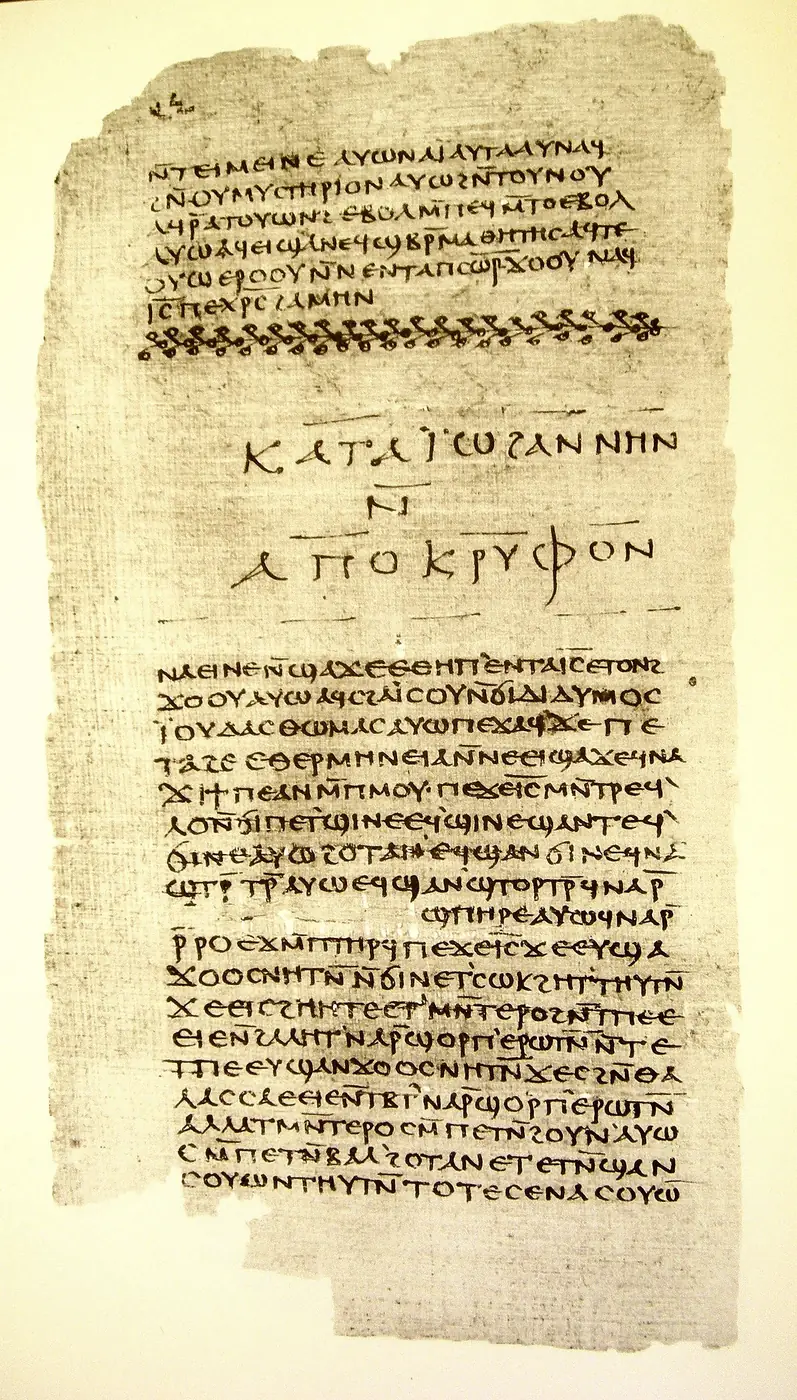
In the time of ʿĪsā ibn Maryam he had many followers who wrote down his sermons and teachings after his departure. Foremost among them were the twelve apostles named in the New Testament. From the records of these followers come the writings collected under the name “gospel,” each named for its writer: the Gospel of Marcion, the Gospel of the Egyptians, the Gospel of Eve, the Gospel of Judas, the Gospel of Nicodemus, the Gospel of Thomas, the Gospel of Matthias, the Gospel of the Twelve, the Gospel of Truth, the Gospel of Mary, the Gospel of Andrew, the Gospel of Philip, and others.5
These gospels are said to contain the teaching of Satan and to contradict the teaching of ʿĪsā ibn Maryam. In truth they are the gospels closest to the original Injīl, never yet infiltrated by the teachings of Paul.
Other gospels belonged to the Jewish followers of ʿĪsā ibn Maryam who kept his law, among them a gospel of the Ebionites that Michael Goulder dates to about 150. Their writings were lost with the communities that kept them, and survive only in quotations by the church fathers who wrote against them.6
Luke, traditionally identified as the author of the Gospel of Luke and of Acts, was Paul’s personal physician.7 In writing his “gospel” he brought in Paul’s teachings of his own accord.
The proof is in Acts, also written by the author of Luke, where the inclination to exalt Paul is unmistakable.8 Luke all but makes a cult of Paul in his writing.
The selection tells its own story. The New Testament gives the impression of a single, developing body of belief because it is a selection of writings, and Michael Goulder names the selectors: “naturally it was selected by the winning mission, that is the Paulines.” Hence its contents, in his account: the letters of Paul and his followers, and four Gospels, “two of them ultra-Pauline and two building bridges to Jerusalem.”9
Paul wrote first
In the chronology of composition, Paul’s letters are among the earliest written documents in the New Testament. Letters such as 1 Thessalonians and Galatians are believed to have been written in the 50s CE, a decade or two after the departure of ʿĪsā ibn Maryam.
The Synoptic Gospels (Mark, Matthew and Luke) were written later, between about 65 and 90 CE, and the Gospel of John around 95 to 100 CE. Historically, then, Paul’s teaching came before the written gospels and very probably shaped the theology they contain.10
So it is no surprise that of the 27 books of the New Testament, 14 are said to be Paul’s.11 Only seven of them are widely accepted by scholars as authentic writings of Paul.12 The other letters in the New Testament are the work of Paul’s followers and supporters.13
Two Pauls: the man and the canon
The count divides the case in two. Six letters carry Paul’s name and are doubted or rejected as his: 2 Thessalonians, Colossians and Ephesians, and the three Pastoral letters to Timothy and Titus, which most scholars assign to his school after his death. The letter to the Hebrews names no author at all, and the church credited it to him only later.14
Acts is a later and weaker witness still. Its author does not give his name, and the book has been dated anywhere from 80 to 150 CE, three decades or more after Paul’s letters.15
This site keeps the two apart. Where a charge concerns Paul himself, what he taught and did, it rests on the seven letters that scholars accept as his, with Acts as a later and weaker witness.
Where a charge concerns the religion that bears his name, all thirteen letters count, because the church received every one of them as Paul’s, read them as scripture and built its doctrine on them. A letter written in his name is marked as such wherever it is quoted.
The line bears on the doctrine of scripture itself. The verse most often cited for the inspiration of the whole Bible, “All scripture is given by inspiration of God,” stands in 2 Timothy, one of the letters written in his name.16 The verse before it names the scripture it means: the holy scriptures that Timothy had known “from a child,” which were the Jewish scriptures, since no Gospel yet existed.17
The early church itself shows why the line matters. In the second century two opposed movements each claimed Paul: the Pastoral letters made him the patron of the ordered household, marriage and obedient wives, and the Acts of Paul and Thecla made him the preacher of virginity who drew women out of their homes.
Each wrote its Paul in his name.18 The Paul of the canon is the Paul the church chose, and the religion of Paul is built on that choice.
Letters that contradict themselves
The dominance reaches beyond the number of texts or the order of writing into the content and the doctrine. Paul’s letters show internal contradictions that cannot be ignored, between the doctrine of one letter and another, and sometimes within the same letter. If a man claims to deliver the revelation of God, the consistency of his teaching is the sine qua non of the claim.
On justification, Paul writes to the Romans that the doers of the law shall be justified, and a chapter later that by the deeds of the law no flesh shall be justified. Both verses speak of the law itself, so the usual defence, that Paul sets the works of the law apart from good deeds in general, has nothing to hold on to here.
13οὐ γὰρ οἱ ἀκροαταὶ νόμου δίκαιοι παρὰ τῷ θεῷ, ἀλλʼ οἱ ποιηταὶ νόμου δικαιωθήσονται.
13(For not the hearers of the law are just before God, but the doers of the law shall be justified.19
20διότι ἐξ ἔργων νόμου οὐ δικαιωθήσεται πᾶσα σὰρξ ἐνώπιον αὐτοῦ, διὰ γὰρ νόμου ἐπίγνωσις ἁμαρτίας.
20Therefore by the deeds of the law there shall no flesh be justified in his sight: for by the law is the knowledge of sin.20
That creates a theological tension between faith and works, and leaves open whether the law still applies. On another matter he states in 1 Corinthians 6:11 that Christians have been sanctified and justified, but in Romans 7:19–24 he admits that he goes on struggling with a sin he cannot leave.
19οὐ γὰρ ὃ θέλω ποιῶ ἀγαθόν, ἀλλὰ ὃ οὐ θέλω κακὸν τοῦτο πράσσω. 20εἰ δὲ ὃ οὐ θέλω τοῦτο ποιῶ, οὐκέτι ἐγὼ κατεργάζομαι αὐτὸ ἀλλὰ ἡ οἰκοῦσα ἐν ἐμοὶ ἁμαρτία. 21Εὑρίσκω ἄρα τὸν νόμον τῷ θέλοντι ἐμοὶ ποιεῖν τὸ καλὸν ὅτι ἐμοὶ τὸ κακὸν παράκειται· 22συνήδομαι γὰρ τῷ νόμῳ τοῦ θεοῦ κατὰ τὸν ἔσω ἄνθρωπον, 23βλέπω δὲ ἕτερον νόμον ἐν τοῖς μέλεσίν μου ἀντιστρατευόμενον τῷ νόμῳ τοῦ νοός μου καὶ αἰχμαλωτίζοντά με ἐν τῷ νόμῳ τῆς ἁμαρτίας τῷ ὄντι ἐν τοῖς μέλεσίν μου. 24ταλαίπωρος ἐγὼ ἄνθρωπος· τίς με ῥύσεται ἐκ τοῦ σώματος τοῦ θανάτου τούτου;
19For the good that I would I do not: but the evil which I would not, that I do. 20Now if I do that I would not, it is no more I that do it, but sin that dwelleth in me. 21I find then a law, that, when I would do good, evil is present with me. 22For I delight in the law of God after the inward man: 23But I see another law in my members, warring against the law of my mind, and bringing me into captivity to the law of sin which is in my members. 24O wretched man that I am! who shall deliver me from the body of this death?21
On the law, Paul insists that believers stand free of it22 and that Christ is the end of the law.23 Yet in Romans 3:31 and 7:12 he says the law is good and must be upheld.
31νόμον οὖν καταργοῦμεν διὰ τῆς πίστεως; μὴ γένοιτο, ἀλλὰ νόμον ἱστάνομεν.
31Do we then make void the law through faith? God forbid: yea, we establish the law.24
12ὥστε ὁ μὲν νόμος ἅγιος, καὶ ἡ ἐντολὴ ἁγία καὶ δικαία καὶ ἀγαθή.
12Wherefore the law is holy, and the commandment holy, and just, and good.25
The contradiction shows a basic uncertainty about the place of law in religious life.
The sharpest contradictions concern women. In 1 Corinthians 14:34–35 he states plainly that women must keep silent in the assembly and may say nothing.
In 1 Corinthians 11:5 he permits women to prophesy and pray openly, provided they cover their heads. That is a basic inconsistency about the public role of women in the Christian assembly.
34Αἱ γυναῖκες ἐν ταῖς ἐκκλησίαις σιγάτωσαν, οὐ γὰρ ἐπιτρέπεται αὐταῖς λαλεῖν· ἀλλὰ ὑποτασσέσθωσαν, καθὼς καὶ ὁ νόμος λέγει. 35εἰ δέ τι μαθεῖν θέλουσιν, ἐν οἴκῳ τοὺς ἰδίους ἄνδρας ἐπερωτάτωσαν, αἰσχρὸν γάρ ἐστιν γυναικὶ λαλεῖν ἐν ἐκκλησίᾳ.
34Let your women keep silence in the churches: for it is not permitted unto them to speak; but they are commanded to be under obedience, as also saith the law. 35And if they will learn any thing, let them ask their husbands at home: for it is a shame for women to speak in the church.26
5πᾶσα δὲ γυνὴ προσευχομένη ἢ προφητεύουσα ἀκατακαλύπτῳ τῇ κεφαλῇ καταισχύνει τὴν κεφαλὴν αὐτῆς, ἓν γάρ ἐστιν καὶ τὸ αὐτὸ τῇ ἐξυρημένῃ.
5But every woman that prayeth or prophesieth with her head uncovered dishonoureth her head: for that is even all one as if she were shaven.27
In Galatians 3:28 Paul declares that there is “neither male nor female” in Christ, as if endorsing absolute equality. To the Corinthians he writes that “the head of the woman is the man,” and requires her to cover her head when she prays.28
The letters written in his name carry the rule further: in Ephesians 5:22–24 wives are ordered to submit to their husbands because the husband is the “head” of the wife. The principle of Galatians does not survive either text.
More confusing still, Paul praises women such as Phoebe as a διάκονος (diákonos, minister of the church)29 and calls Junia “of note among the apostles,”30 but the first letter to Timothy, written in his name, forbids women to teach or hold authority over men.31 Once again, actual practice conflicts with the doctrinal rule he wants to enforce.
These contradictions are more than editorial slips or matters of style. What we have inherited as “holy epistles” is, read in toto, a set of mutually contradictory letters from the pen of a man tossed between personal inspiration and the desire to master the message of tawḥīd (توحيد, “the oneness of God”) brought by the prophets.
- Mark 5:41, טַלִיתָא קוּמִי (ṭalītā qūmī): “Damsel, arise.” ↩
- Mark 7:34, אֶפְתַּח (ʾeptaḥ): “Be opened.” ↩
- Mark 15:34, אֵלִי אֵלִי לָמָה עֲזַבְתָּנִי (ʾēlī ʾēlī lāmā ʿazavtānī): “My God, my God, why hast thou forsaken me?” ↩
- See Bruce M. Metzger, The Early Versions of the New Testament: Their Origin, Transmission, and Limitations (Oxford: Clarendon Press, 1977), pp. 103–105. ↩
- The Gospel of Thomas, the Gospel of Philip and the Gospel of Truth were among the texts found in the Nag Hammadi collection of manuscripts in Egypt in 1945; the Gospel of Mary survives in a codex now in Berlin, and the Gospel of Judas in the Codex Tchacos, published in 2006. David M. Scholer, “The Secret is Out,” Christian History 96 (2007), https://christianhistoryinstitute.org/magazine/article/the-secret-is-out. ↩
- Michael Goulder, St. Paul versus St. Peter: A Tale of Two Missions (Louisville: Westminster John Knox Press, 1995), p. 108. ↩
- Colossians 4:14, in a letter written in Paul’s name; Philemon 1:24, in one of his own, names Luke among his fellow workers. Dale B. Martin judged the traditional ascription of the Gospel and Acts to this Luke almost certainly mistaken: Dale B. Martin, notes on “Luke” and Paul, 2019, published on this site with his permission, dale-b-martin-luke-versus-paul. ↩
- Acts 13:9; 16:10–17; 20:5–21:18. ↩
- Michael Goulder, St. Paul versus St. Peter: A Tale of Two Missions (Louisville: Westminster John Knox Press, 1995), p. x. Goulder presents the Two Missions thesis as his own reading, “not an amalgam of standard opinions,” and as a revival of the proposal Ferdinand Baur made in 1831 (p. 194). ↩
- See Bruce M. Metzger, The New Testament: Its Background, Growth, and Content (Nashville: Abingdon Press, 2003), pp. 98–99. ↩
- The texts Paul wrote are better called “epistles,” since they were communications addressed to particular congregations in their religious context. ↩
- Romans, 1 Corinthians, 2 Corinthians, Galatians, Philippians, 1 Thessalonians and Philemon. See Bart D. Ehrman, Forged: Writing in the Name of God: Why the Bible’s Authors Are Not Who We Think They Are (HarperOne, 2011); Raymond E. Brown, An Introduction to the New Testament (Anchor Bible Reference Library, 1997); E. P. Sanders, Paul: The Apostle’s Life, Letters, and Thought (Fortress Press, 2015). ↩
- The other letters meant are Hebrews, 2 Peter, 2 John, 3 John, James, Jude and Revelation (ibid.). ↩
- Dale B. Martin, “Paul’s Disciples,” Lecture 17, RLST 152: Introduction to New Testament History and Literature, Open Yale Courses, Yale University, Spring 2009, https://oyc.yale.edu/religious-studies/rlst-152; Dale B. Martin, “The ‘Household’ Paul: The Pastorals,” Lecture 19, RLST 152: Introduction to New Testament History and Literature, Open Yale Courses, Yale University, Spring 2009, https://oyc.yale.edu/religious-studies/rlst-152. ↩
- Dale B. Martin, notes on “Luke” and Paul, 2019, “The Chronology and Geography of Paul’s “Conversion” and Early Ministry,” published on this site with his permission: dale-b-martin-luke-versus-paul. ↩
- 2 Timothy 3:16. ↩
- 2 Timothy 3:15. ↩
- Dale B. Martin, “The ‘Anti-household’ Paul: Thecla,” Lecture 20, RLST 152: Introduction to New Testament History and Literature, Open Yale Courses, Yale University, Spring 2009, https://oyc.yale.edu/religious-studies/rlst-152. ↩
- Romans 2:13 (SBLGNT; KJV). ↩
- Romans 3:20 (SBLGNT; KJV). ↩
- Romans 7:19–24 (SBLGNT; KJV). ↩
- Romans 6:14. ↩
- Romans 10:4. ↩
- Romans 3:31 (SBLGNT; KJV). ↩
- Romans 7:12 (SBLGNT; KJV). ↩
- 1 Corinthians 14:34–35 (SBLGNT; KJV). ↩
- 1 Corinthians 11:5 (SBLGNT; KJV). ↩
- 1 Corinthians 11:3–10. ↩
- Romans 16:1–2. ↩
- Romans 16:7. ↩
- 1 Timothy 2:12. ↩