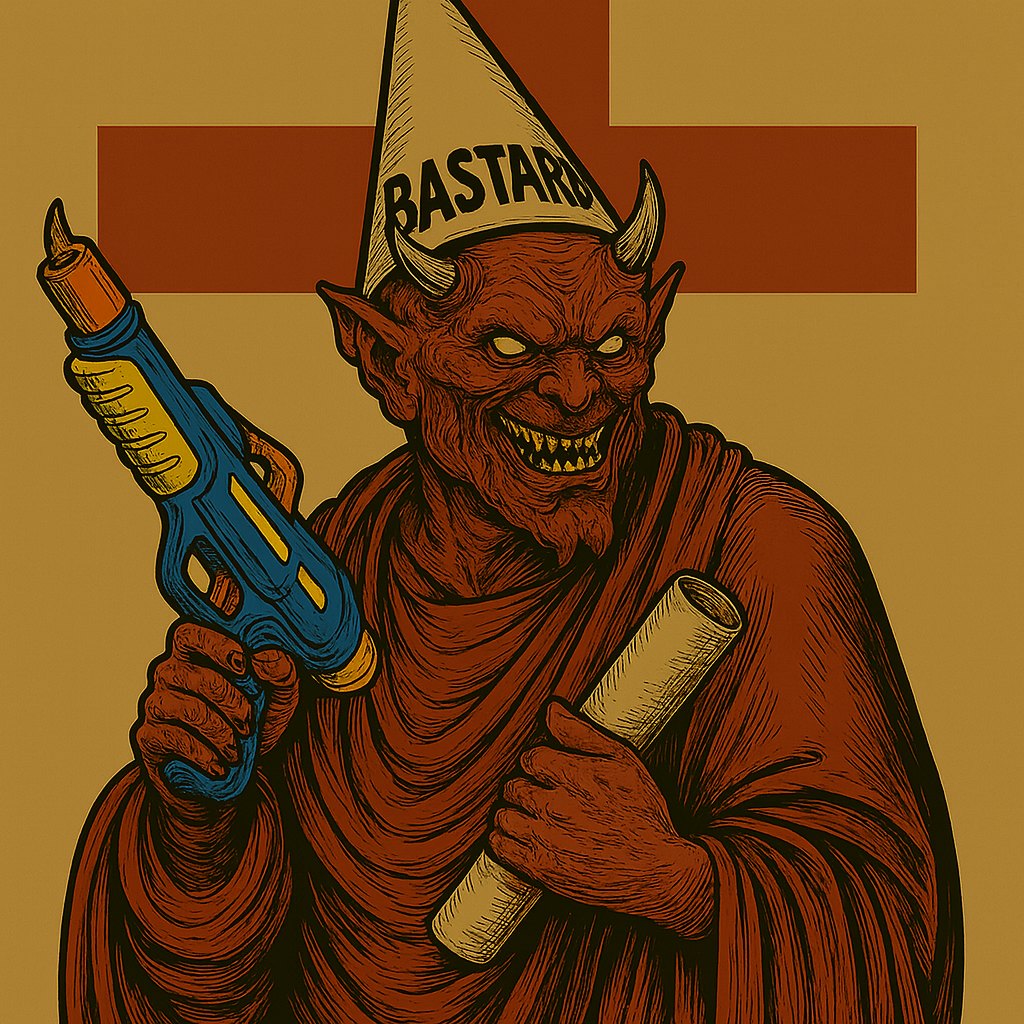
Now that it is plain that the roots of modern Christianity lie in Paul and not in ʿĪsā ibn Maryam (ʿalayhi al-salām, peace be upon him), it becomes an intellectual duty for those who seek the truth to distinguish between the message of heaven and the invention of man. The view of a churchman such as John Shelby Spong, an Anglican bishop who long wrestled with the contradictions of the Christian tradition, cannot be set aside. He insisted that Paul’s teachings carry no claim to absolute revelation:
Paul’s words are not the Words of God. They are the words of Paul, a vast difference.2
Spong challenged Paul’s absolute authority in theology, and he also showed that many of Paul’s injunctions, the demeaning of women, the sanctioning of slavery, the exaltation of political power, reflect the views of a man trapped in a cultural frame long since abandoned. In his view, unless Paul’s writings are freed from “the crust of first-century culture,” they become a moral burden and no spiritual grace.
Teachings such as “let your women keep silence in the churches,” “servants, obey your masters” and “every ruler is the minister of God” reflect an age full of prejudice, and if defended literally they turn religion into a tool of oppression hiding behind revelation. So, Spong adds, whoever exalts these words too far as scripture will end by destroying their own spiritual meaning, since “those who claim too much will finally achieve nothing.”
As the Qurʾān says of those who distort revelation:
فَوَيْلٌ لِّلَّذِينَ يَكْتُبُونَ ٱلْكِتَٰبَ بِأَيْدِيهِمْ ثُمَّ يَقُولُونَ هَٰذَا مِنْ عِندِ ٱللَّهِ
“So woe to those who write the scripture with their own hands, then say, ‘This is from God.’”3
The religion that issued from the pen and mind of Paul is a human reconstruction that departs from the message of tawḥīd (توحيد, “the oneness of God”). It is more accurately named the Religion of Paul, because its foundation is a defensive doctrinal interpretation of the inner wounds of a man who failed to make peace with his own history. The difference between the tawḥīd brought by ʿĪsā al-Masīḥ and the Religion of Paul is a total separation between two roads: one sourced in heaven, the other born of a crisis of the soul.
Blood at the center
Beyond the plain separation between the message of ʿĪsā ibn Maryam and the religion that now bears his name, the centering of modern Christian dogma on blood sacrifice and the concept of a “divine victim” shows that the Religion of Paul has shifted its focus from tawḥīd to myth. From the table of Holy Communion to the altar of the evangelical movement, blood becomes the symbol of redemption, because of Paul’s theology and never because of the word of God.
Paul’s legacy did more than shape the basic doctrine of modern Christianity. It goes on feeding an eschatological imagination that provokes crises in contemporary geopolitics.
One of the plainest examples is the continuing effort of the Zionist movement and Christian evangelism to rebuild the Third Temple on the Temple Mount in Islamicjerusalem, an apocalyptic project that requires the presence of a perfect red heifer for ritual purification according to Numbers 19.4 That this animal sacrifice is treated as a precondition for restarting the building of the Temple reflects the continuity of the theology of blood sacrifice founded by Paul, above all his belief that redemption from sin and reconciliation with God are impossible without the shedding of blood: “without shedding of blood is no remission.”5
22And almost all things are by the law purged with blood; and without shedding of blood is no remission.1
Orthodox Jews understand it literally and the evangelical movement symbolically, but both share a frame of thought that derives from Paul’s ideology: that divine purification depends on physical sacrifice alone. The concept departs from the message of tawḥīd brought by the prophets, and it is an inheritance of pagan theology adapted into a system of faith claimed to be of the religion of Ibrāhīm. The rebuilding of the Third Temple6 and the search for the parah adumah7 (פָּרָה אֲדֻמָּה) are only the latest manifestation of the Religion of Paul, a religion that deifies blood over repentance, ritual over revelation, and human conjecture over the law of God.
Christian Zionism and Malaysia
The ideology has grown alongside the rise of Christian Zionism within the modern evangelical movement, which regards the founding of the illegal state of Israel and control of the Temple Mount as the fulfillment of Bible prophecy. The current has shaped doctrine in Western churches, and it has also become part of the foreign policy of great powers such as the United States. In an official debate of the Dewan Negara of Malaysia it was disclosed that this Christian Zionist element has targeted Malaysia, and Penang in particular, as a “laboratory of religious and political transformation,” through political infiltration, evangelical dominionism, and covert dakyah (Christian proselytism) wrapped in the rhetoric of humanitarian aid.8
What began as a theological deviation has grown into a global system of faith that plunders the meaning of tawḥīd, defiles prophethood, and replaces truth with myth. The Religion of Paul can no longer be allowed to shackle humanity.
The modern world should not go on being deceived by the mythology of divine sacrifice and a false theology of salvation that has served as a tool of spiritual colonialism and political violence. The global evangelical movement that inherits Paul’s spirit and theology has a modus operandi of its own: social media, information technology and postmodern narrative, used ever more aggressively to spread its message and openly insult Islam in pursuit of its agenda of apostasy.9
- Hebrews 9:22 (KJV). ↩
- John Shelby Spong, Rescuing the Bible from Fundamentalism: A Bishop Rethinks the Meaning of Scripture (San Francisco: Harper, 1991), p. 101. ↩
- Sūrah al-Baqarah 2:79. ↩
- See Numbers 19:2–10. The law of the red heifer (parah adumah, פָּרָה אֲדֻמָּה) requires a heifer without blemish, never put to work, slaughtered and burned outside the camp to produce the ashes of purification. The ashes are mixed with living water and used to purify those defiled by contact with death. See also Mishnah Parah 3–4; Bamidbar Rabbah 19:8; and Rashi’s commentary on Numbers 19:2. ↩
- Hebrews 9:22 reads literally: “and without shedding of blood is no remission.” The verse became the basis of the theology of sacrifice in the Religion of Paul, and shapes the symbolic interpretation of the crucifixion as the “final sacrifice” among modern evangelical movements. ↩
- See Iain Buchanan, Sang Nila Utama and the Lion of Judah: Dominionism and Christian Zionism in Malaysia (Penang: Citizens International, 2015), pp. 17–25. The study describes how the eschatological narrative of Zionism and the evangelical movement, including belief in the restoration of the Third Temple and the red heifer, is rooted in the Religion of Paul’s interpretation of sacrifice and purification, later used to justify political and religious dominance in the name of prophecy. ↩
- Efforts to breed the parah adumah by the Temple Institute and Boneh Israel include the shipment of five red heifers from Texas to Israel in 2022 and an active breeding program at Shiloh since 2017. See The End Time News, 30 January 2025, https://bit.ly/3FtwmAY; Charisma News, 26 December 2024, https://bit.ly/4kw6wv8; and The Temple Institute, 2023, https://bit.ly/4kGViE5. ↩
- Hansard, Dewan Negara Malaysia, First Meeting, Fifth Session, Thirteenth Parliament, Third Day: Wednesday, 19 April 2017. Speech by Tan Sri Dato’ Seri Dr. Ibrahim Shah bin Abu Shah, pp. 46ff. The speech cites Iain Buchanan, op. cit., which holds that the Christian Zionist movement has made Malaysia, and Penang in particular, a “laboratory of religious and political transformation” for Southeast Asia, through covert dakyah, infiltration of political parties, and a doctrine of dominionism based on an extreme reading of Bible prophecy. ↩
- See the official complaint filed with the Malaysian Communications and Multimedia Commission (MCMC) on 10 March 2025, concerning dakyah content published by the YouTube channel Impact Evangelism, run by a right-wing evangelical preacher named Johnny P. MacAllister, based in the United States. ↩