Every article and page on the site, grouped as the case is built.
The man
Saul of Tarsus, from persecutor of the first believers to self-appointed apostle, and the mind behind the change.
Profile
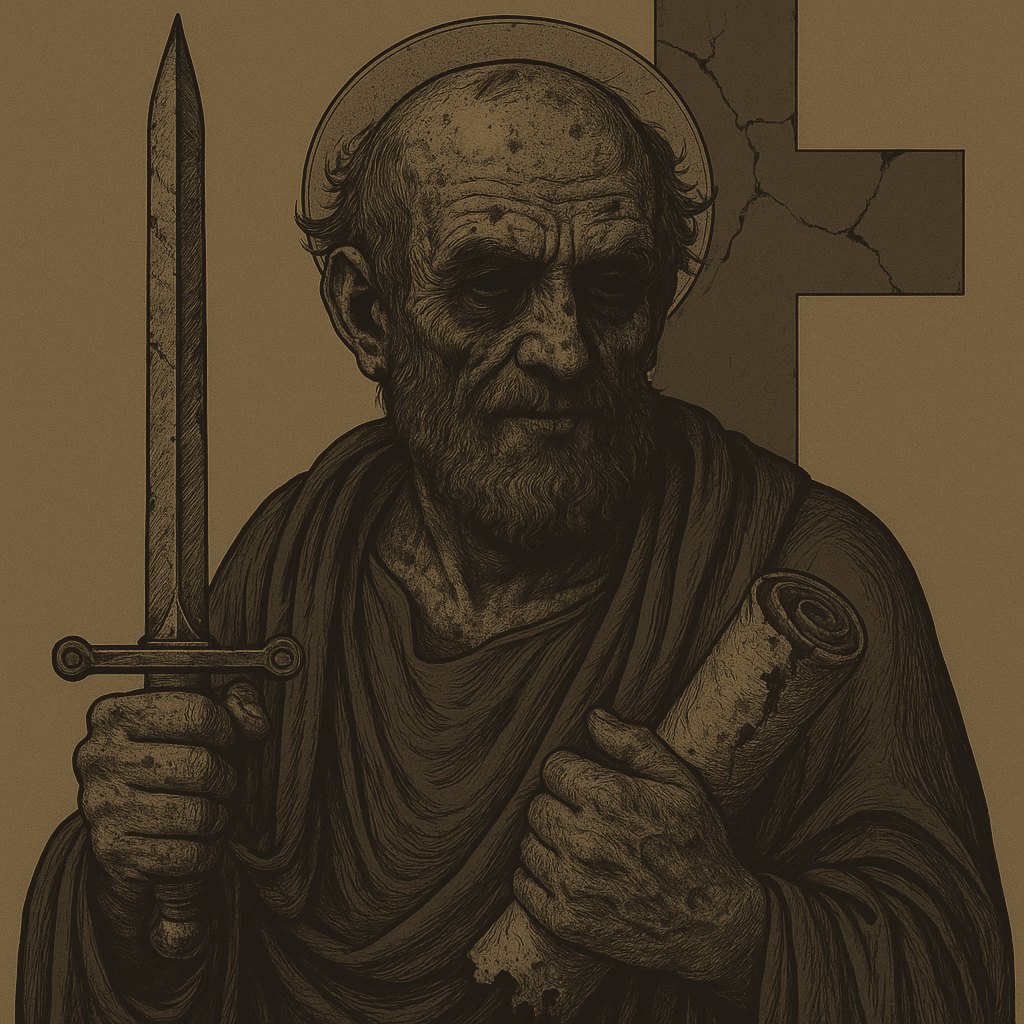
Who was Paul of Tarsus?
A Pharisee from Cilicia who hunted the first followers of ʿĪsā ibn Maryam, then claimed to be their apostle. What the sources allow us to know about the man.
The vision
The vision: from Saul to Paul
Acts records that Saul dragged men and women to prison and consented to the killing of Stephen. The Jewish tradition has a name for that hatred.
In 3 parts
The mind
A psychological portrait of Paul
A persecutor who began to see visions, and never stopped fighting his own past. What identity theory and psychoanalysis suggest.
In 2 parts
The charges
Six counts against Paul, each argued from his own letters and from the record of the community that knew ʿĪsā.
Count·I
Two portraits of ʿĪsā ibn Maryam
Muslims and Christians both claim to love ʿĪsā ibn Maryam. They love two different figures, and the difference traces back to one man.
Count·II
Paul against the disciples
The Jerusalem community kept the law of Mūsā. Paul set it aside, then performed it in the Temple when it suited him.
In 2 parts
Count·III
The law as a curse
Salvation by faith alone and the law of Mūsā recast as a curse. How Paul rebuilt the message of ʿĪsā ibn Maryam for a Gentile audience.
In 3 parts
Count·IV
Revelation or borrowing?
Paul claimed his gospel came by direct revelation. Its central ideas were already circulating among the rabbis before him.
In 2 parts
Count·V
How Paul came to own the New Testament
Thirteen of the twenty-seven books bear Paul's name, and the canon was settled by churches that followed him. The letters themselves do not agree.
In 3 parts
Count·VI
Paul, the father of a new religion
The followers of ʿĪsā ibn Maryam called themselves believers. Paul's churches acquired a new name and a new faith, and Western thinkers from Jefferson onward noticed.
In 3 parts
The witnesses
The Jewish followers of ʿĪsā who refused Paul, the Muslim scholars who named him, and a letter from one who once defended him.
The early church
The first witnesses against Paul
The first to reject Paul were followers of ʿĪsā ibn Maryam who kept his law. Their own opponents in the church recorded their testimony.
The Islamic tradition
Paul in the Islamic tradition
Muslim scholars named Paul as the corrupter of the religion of ʿĪsā ibn Maryam a thousand years before Western criticism reached the same place.
In 3 parts
Testimony
An epistle to the churches of Paul
A letter in Paul's own form, written by one who once defended him, to those who still do.
Pages
- Answers to missionary claims
Short answers to the claims Christian missionaries make most often about Paul.
- The verdict
Why rejecting Paul is a moral question as well as a theological one.
- Reference
The timeline, glossary, study guide and sources behind the articles.
- Timeline of Paul’s life
Paul's life and missions set against events in Rome and Judaea.
- Glossary
The names and terms used across the articles.
- Study guide
Questions for each article, for study circles and classes.
- Sources
Primary texts and scholarship drawn on by the book.
- The book
Paulus: Perosak Risalah Al-Masih, the book these articles are drawn from.