The church has painted, carved and cast Paul for seventeen centuries, and the image it settled on is consistent from the catacombs to the Vatican. He is bald or balding, with a high forehead and a long, pointed dark beard; he holds a book and, from the high Middle Ages, a sword. The book stands for his letters, the sword for the instrument of the martyrdom the tradition assigns him.
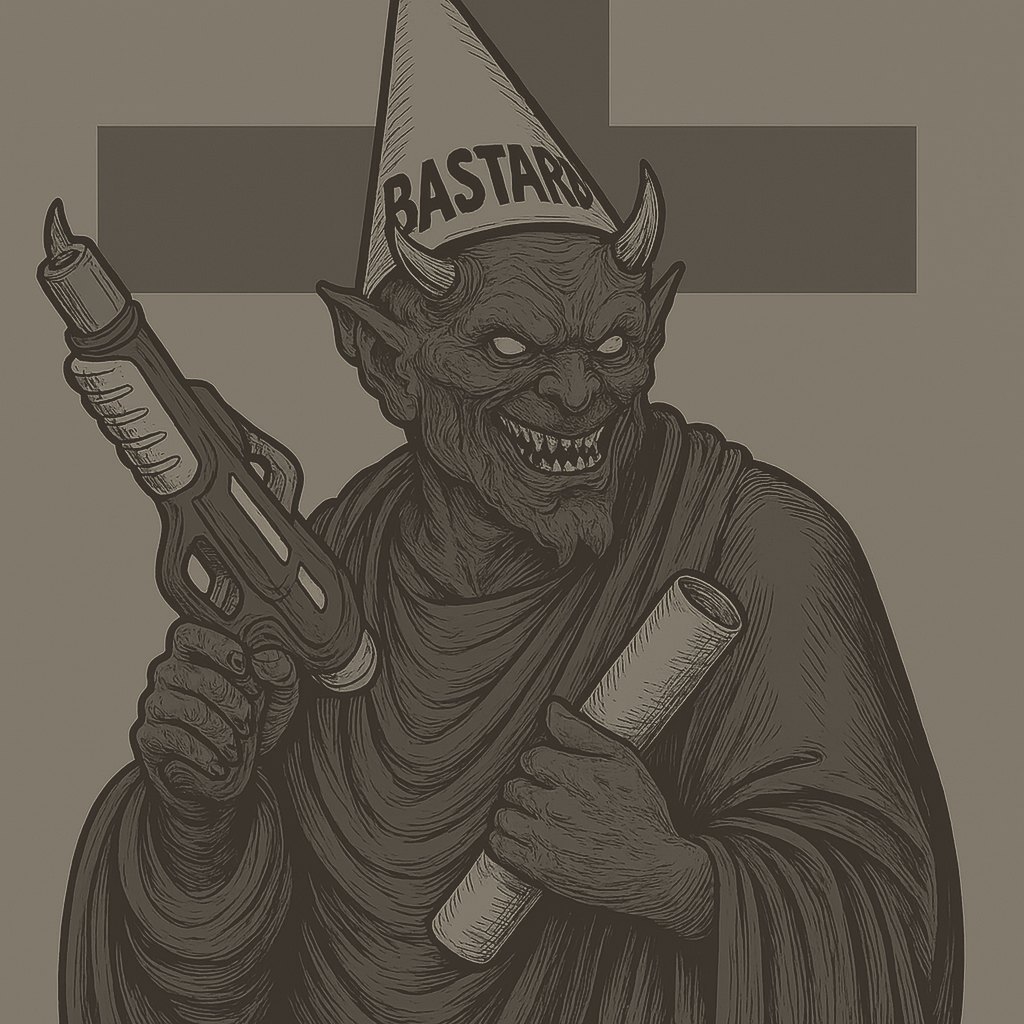
The illustrations on this site take that image and turn it. The sword and the scroll in every portrait here are the church’s own attributes, given back to Paul with the halo cracked, the horns added and the cap lettered. This page shows the originals.
The earliest portrait
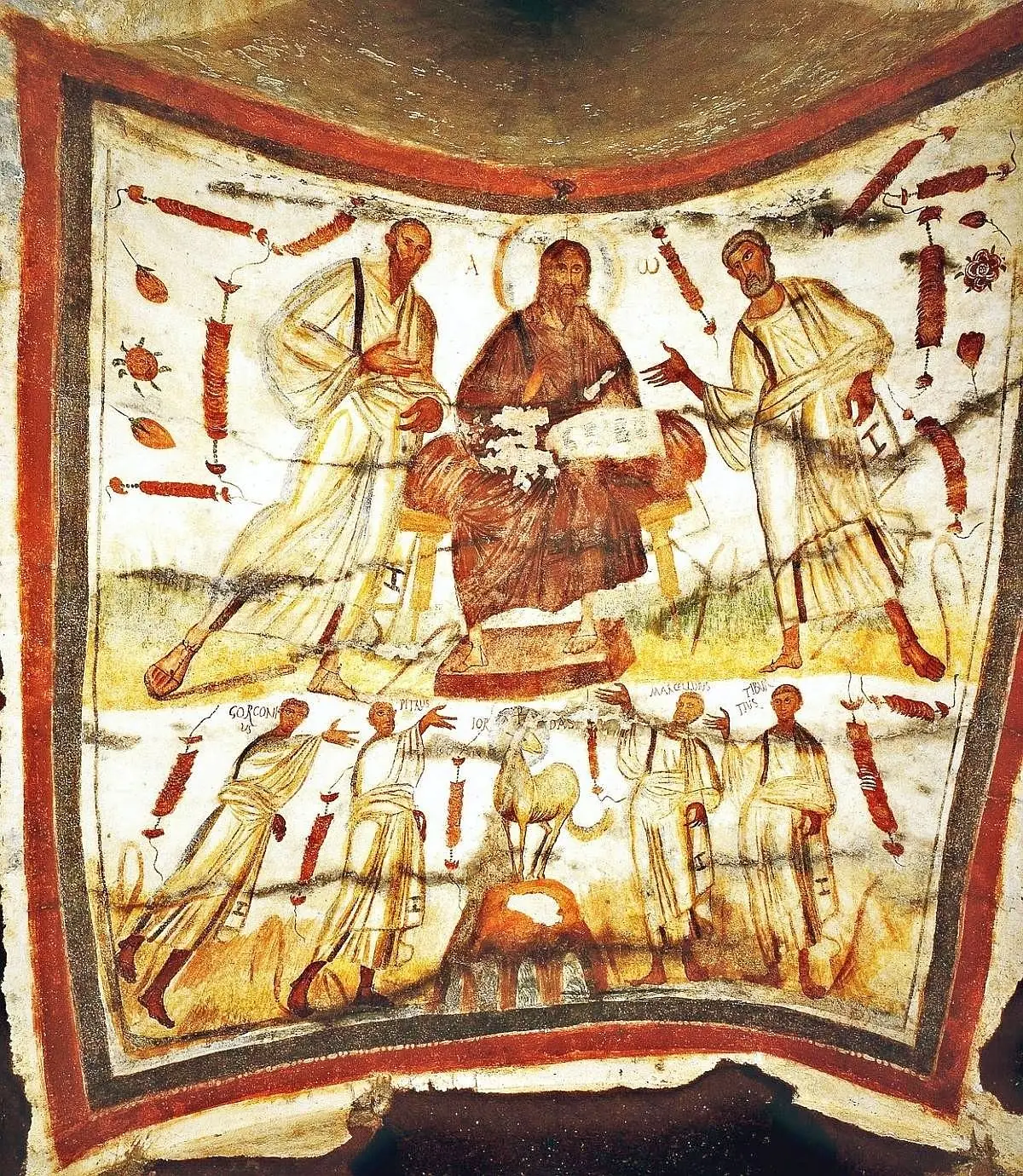
The oldest images of Paul come from the catacombs of Rome, from the fourth century, when the church had already paired him with Peter as the founders of its Roman see. In this fresco he stands beside the enthroned Christ, the type already fixed.
The founders of Rome
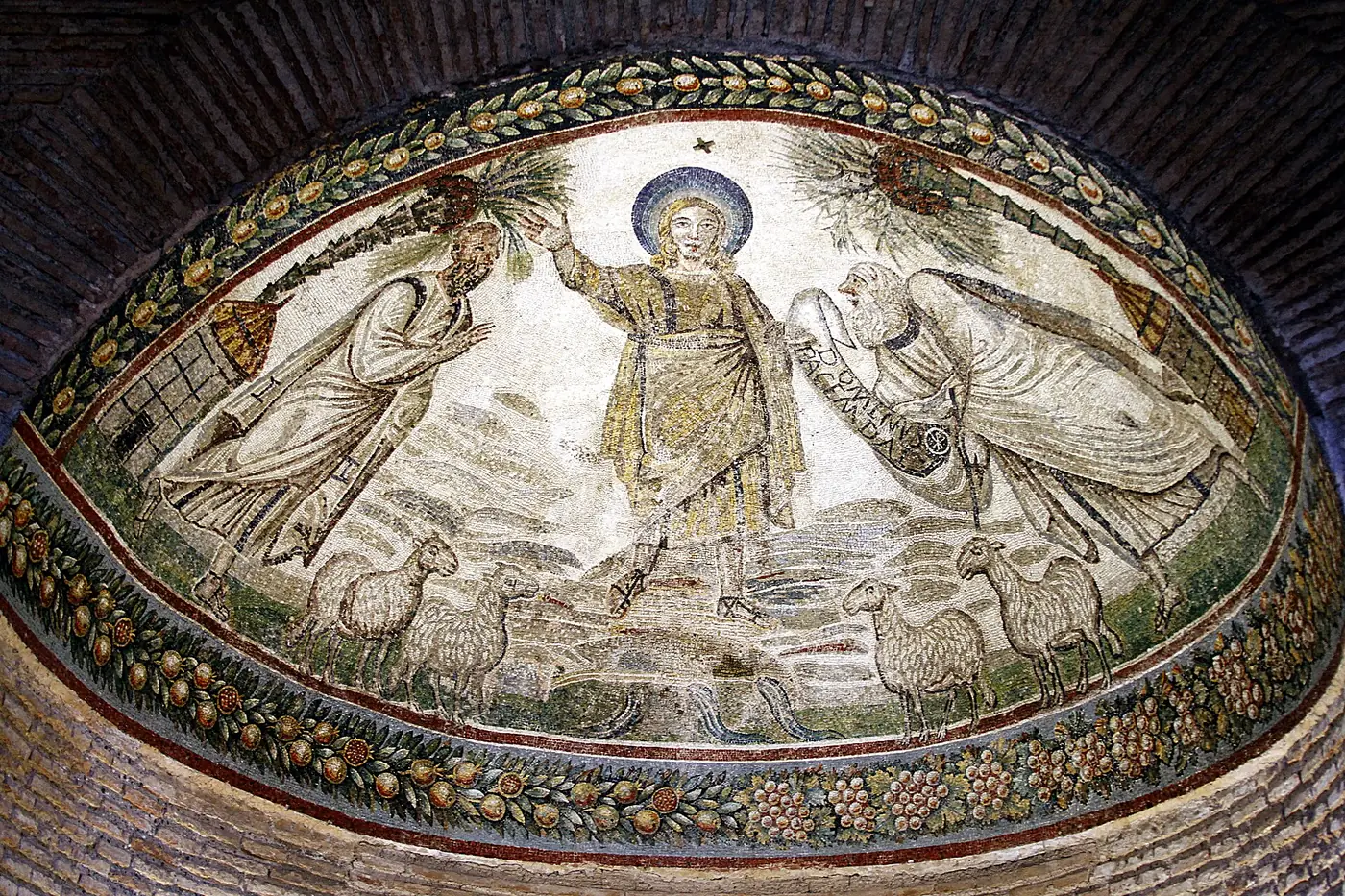
Within a generation of Constantine the pairing became a programme. In the apse of Santa Costanza, Christ stands between Peter and Paul in the scene called the Traditio Legis, the handing over of the law. The man who called the law a curse stands at the side of the one who hands it over.
The Byzantine saint
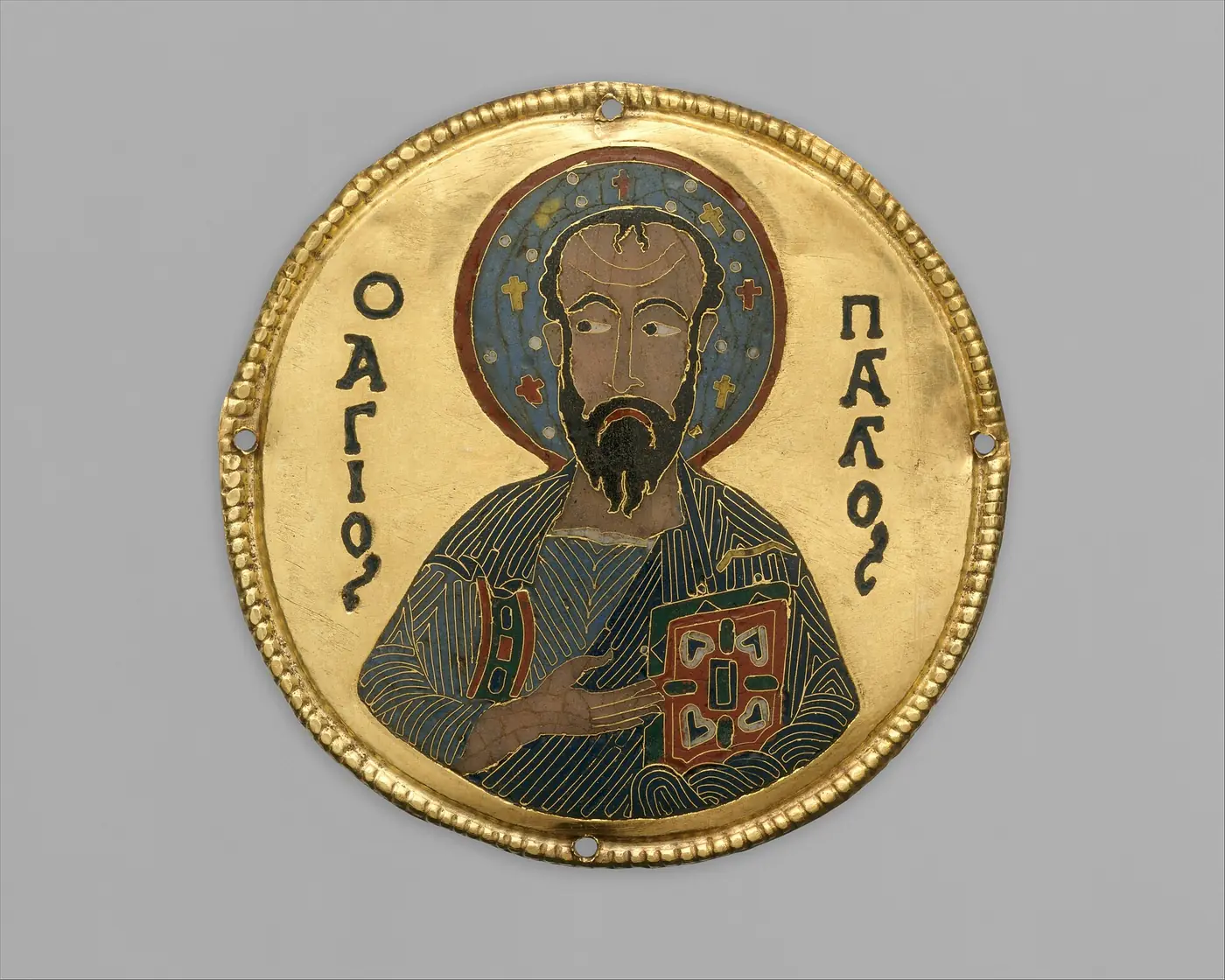
The Greek church kept the same face and added the gold. This enamel medallion, made for the frame of an icon around 1100, names him in Greek as Ho Hagios Paulos, “Saint Paul,” and shows him with the book of his letters.
The light on the road
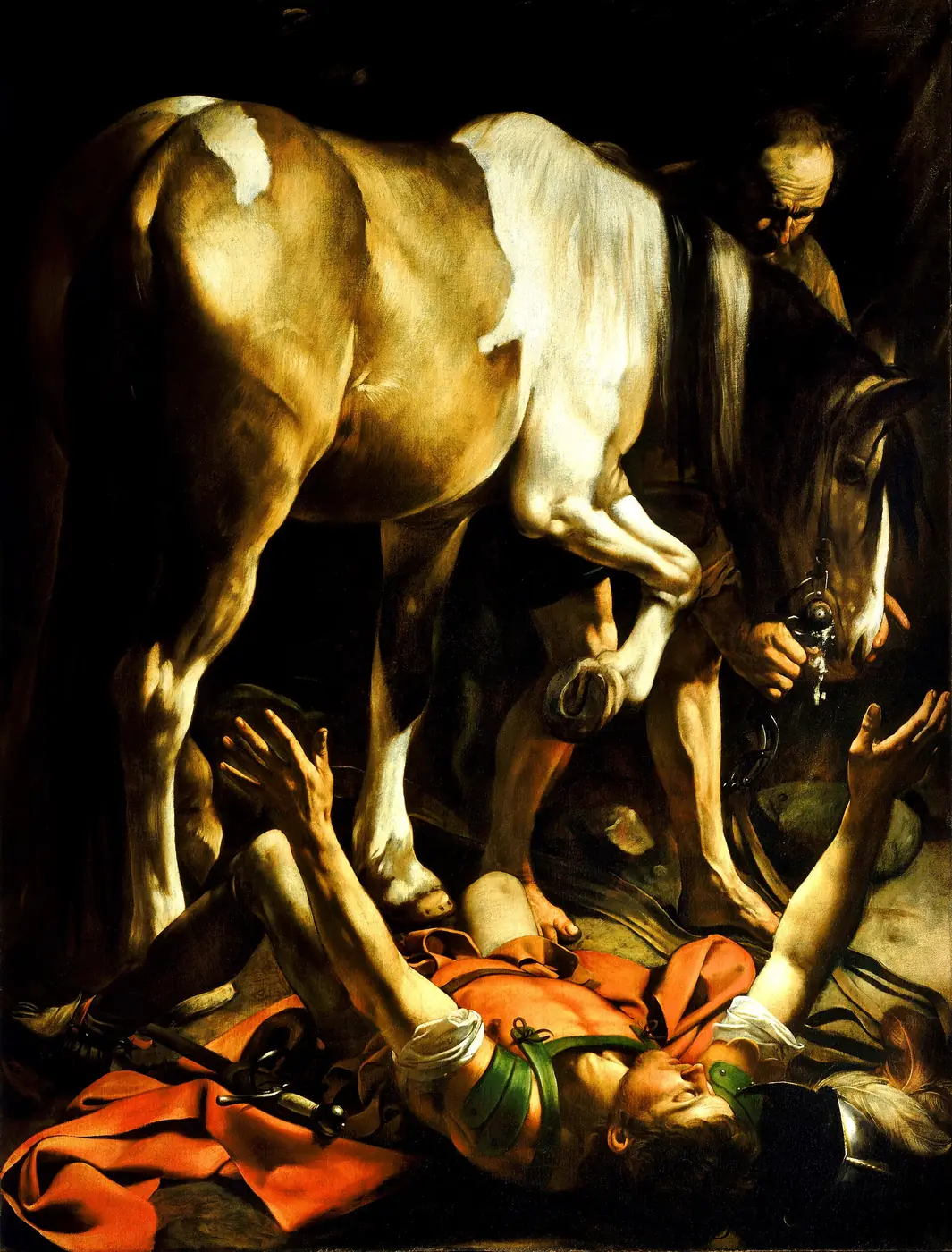
The Renaissance and the Baroque painted the conversion more than any other scene of his life. Caravaggio’s version, painted for a chapel in Santa Maria del Popolo, is the most famous; its treatment of the three accounts in Acts is discussed under The Damascus road: one vision, three stories.
The sword and the book
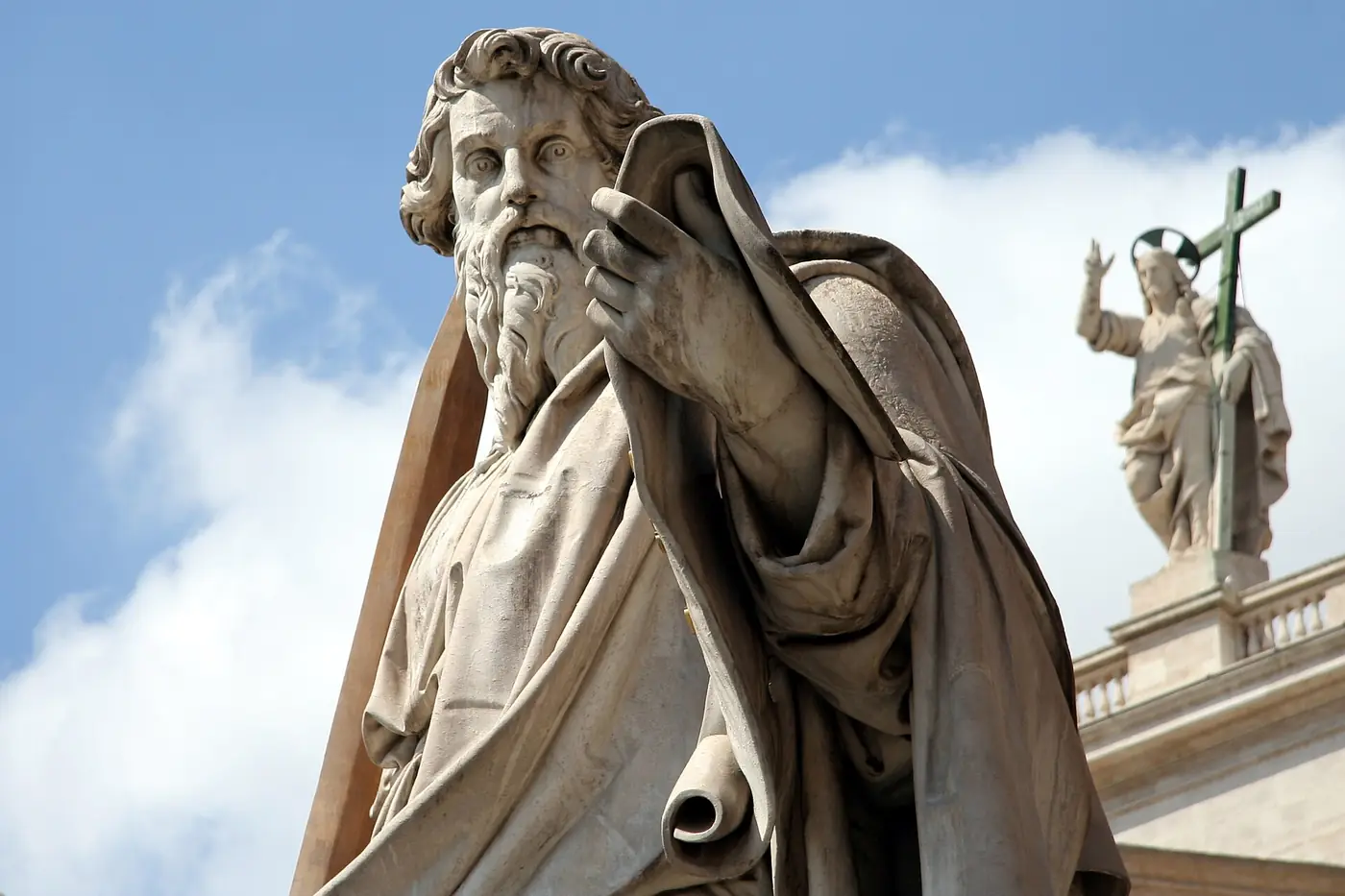
In the nineteenth century the papacy set a colossal Paul before Saint Peter’s, facing a Peter with his keys. Adamo Tadolini’s statue gives him both attributes at full size: the sword held downward in one hand, the book in the other.
The cult of relics
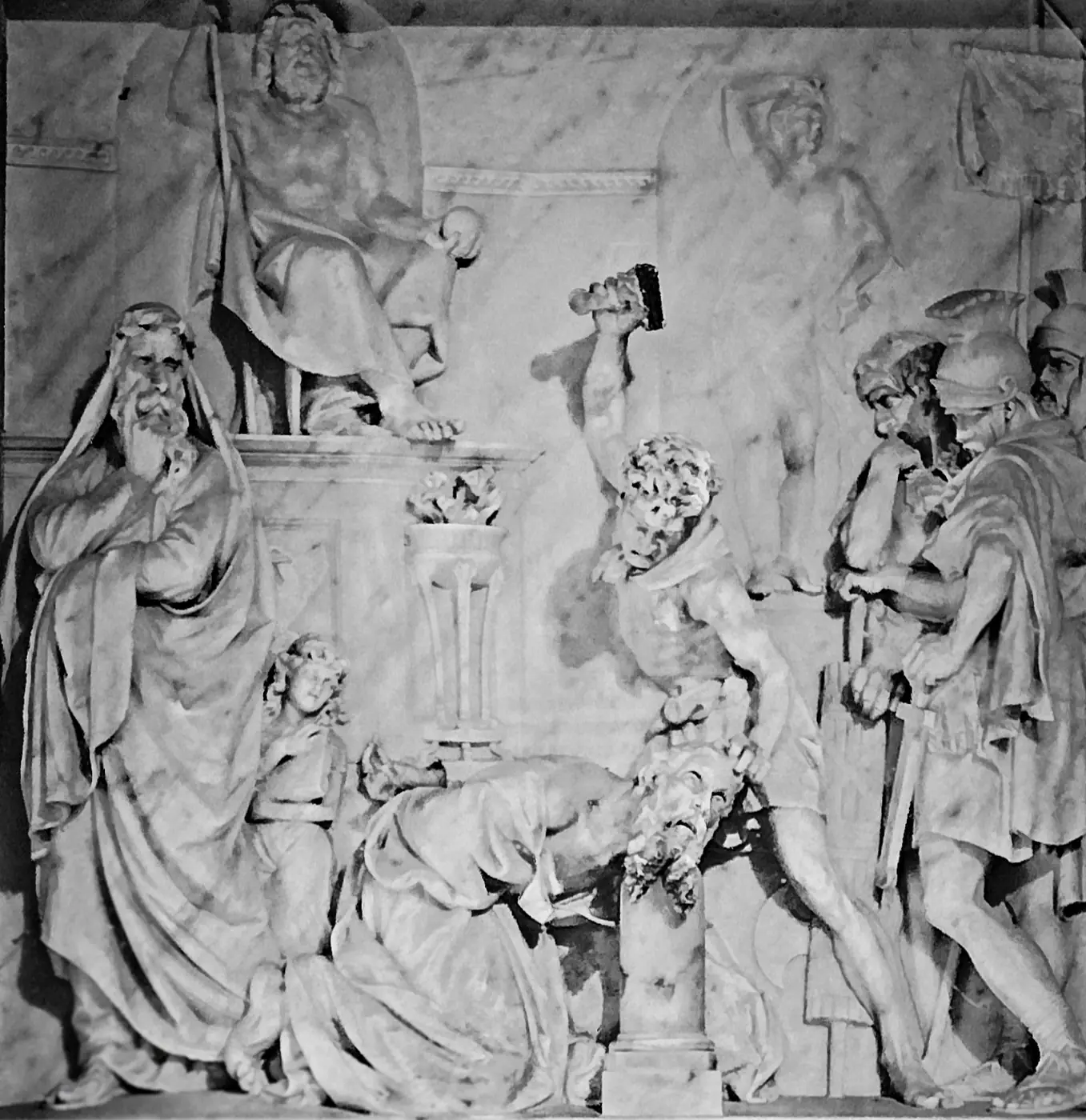
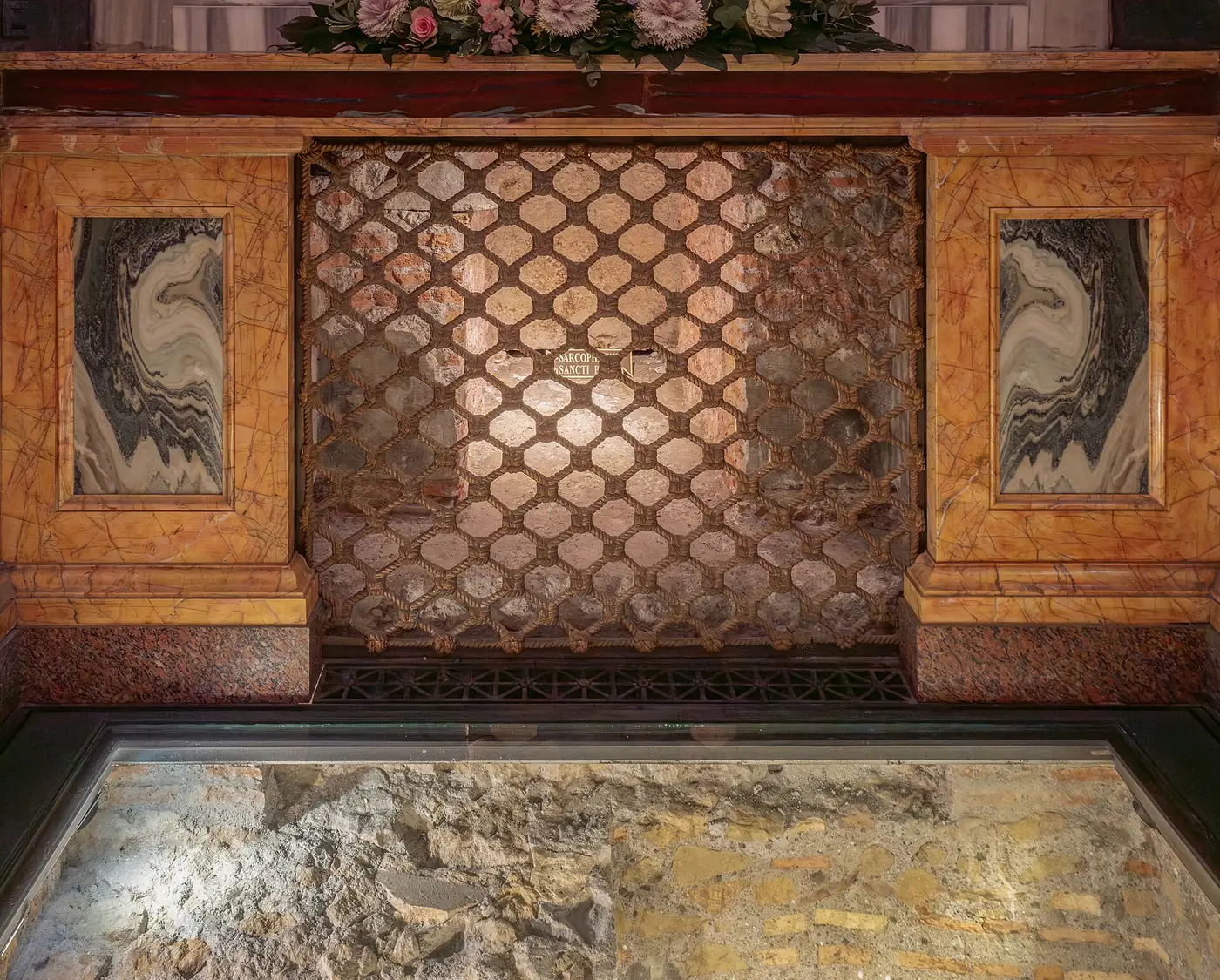
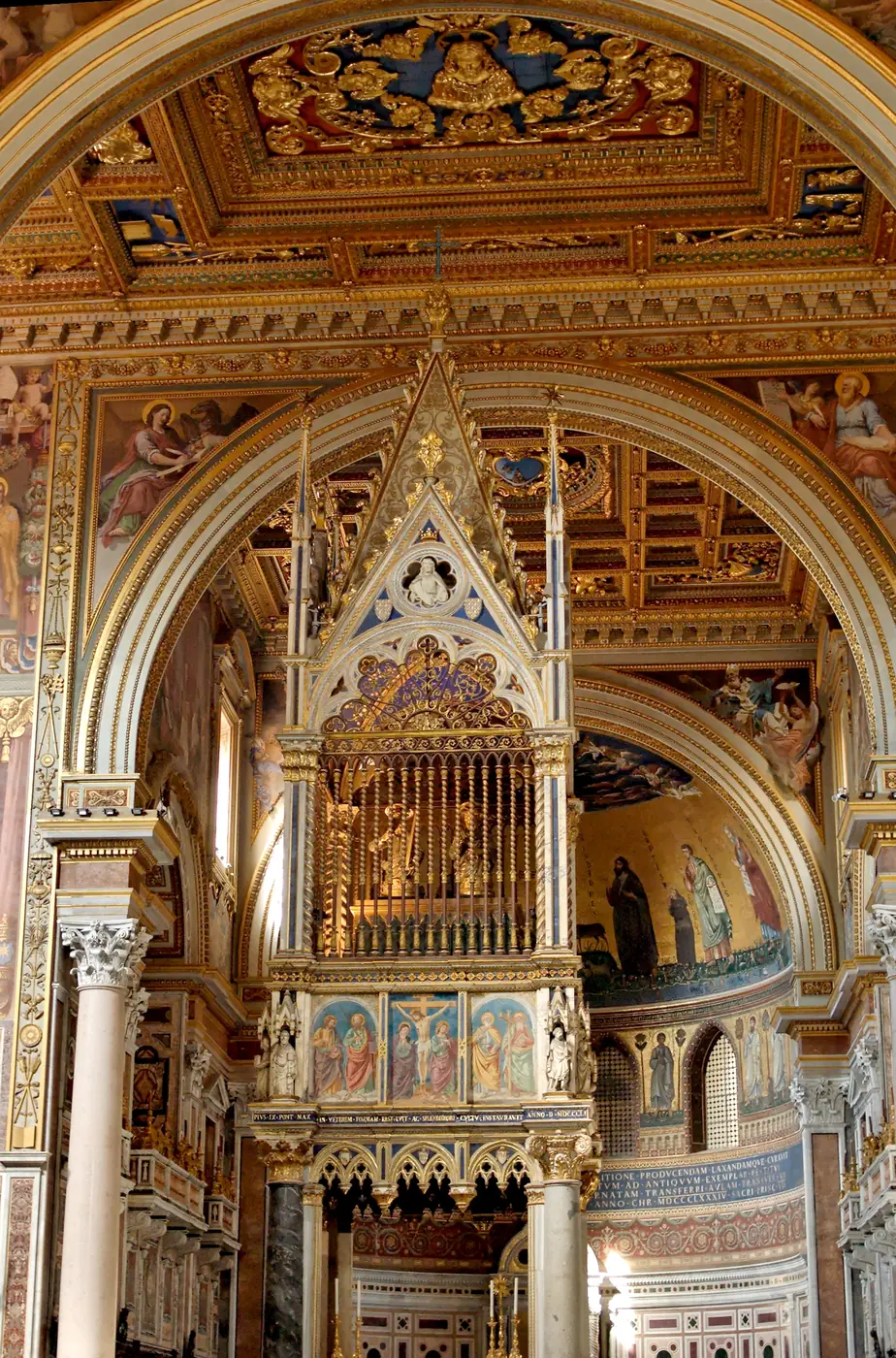
Rome shows three sites of Paul’s death and burial, none of them recorded in scripture. The church at Tre Fontane marks the place of the beheading; the basilica on the Ostian Way keeps the sarcophagus; the Lateran keeps the head. Their evidence is examined under The failed prophet.
What the images show
The iconography is a record of the church’s judgment on Paul. The church gave the man who never met ʿĪsā ibn Maryam (ʿalayhi al-salām, peace be upon him) a place beside Peter, at the gate of its chief basilica, over its high altars and in its reliquaries. The case this site sets out is that the place was usurped; the images show how completely the usurpation succeeded.
Every photograph on this page and in the articles is taken from Wikimedia Commons under the licence shown beneath it, and each links to its source.