
Paul’s teaching can be summarized under seven heads.
1. Two gods in place of one
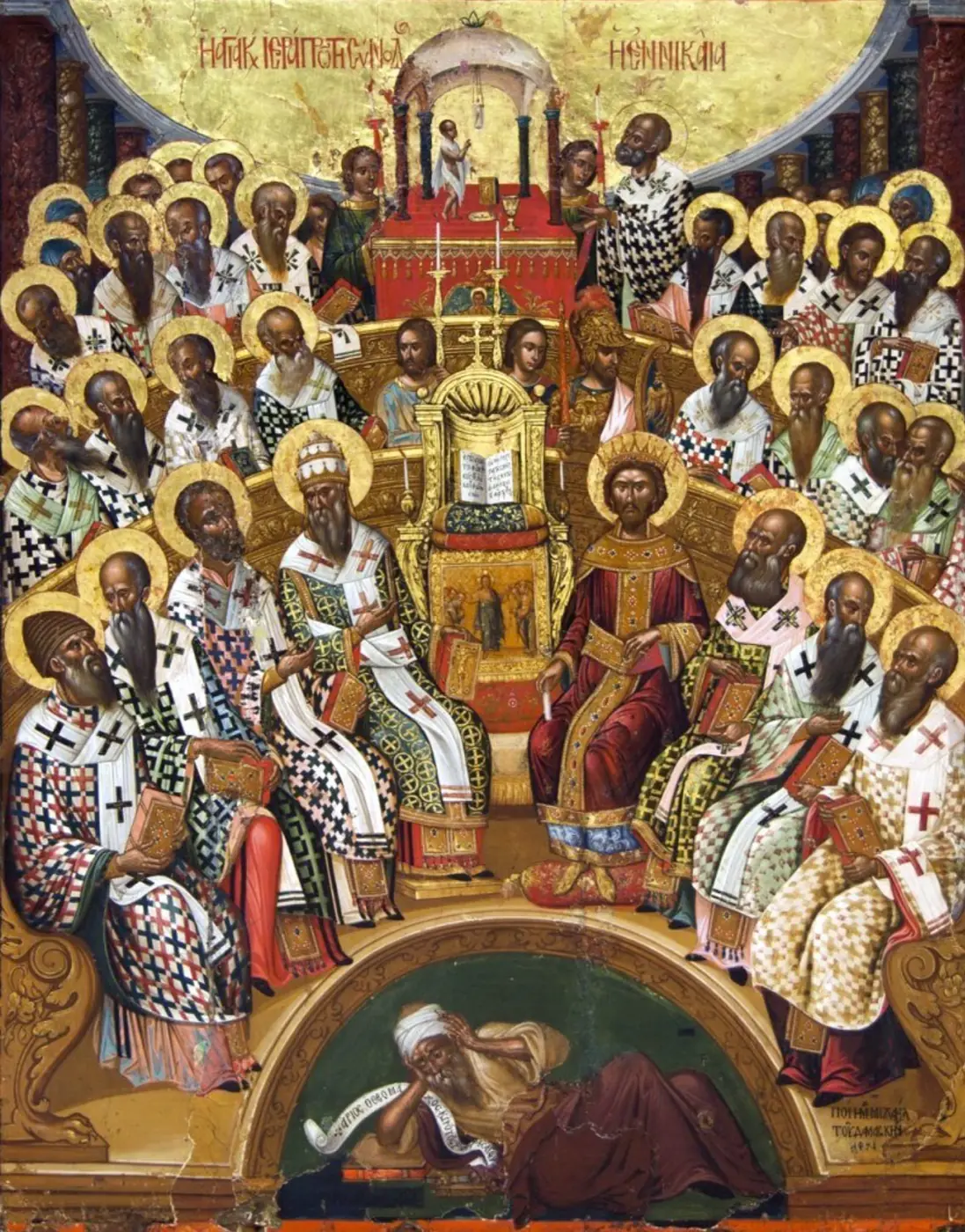
Paul taught that God is two: God the Father and God the Son.1 Jesus Christ is treated as the Son of God, nearly equal to him and nearly of one substance with him. The doctrine of the Trinity was defined three centuries later; Paul laid the foundation on which it was built.2
2. Crucifixion and resurrection as the price of sin
According to mainstream Christian understanding, Jesus Christ was crucified, died and was laid in a tomb. He is then said to have risen on the third day and ascended to heaven to sit at the right hand of God the Father Almighty.3
The crucifixion is believed to have redeemed the sins of all humanity, because human beings are held to be born in sin through the Original Sin inherited from Ādam, without exception.4 Paul insisted that no one could be counted a true follower of ʿĪsā ibn Maryam (ʿalayhi al-salām, peace be upon him) unless he believed with all his heart that ʿĪsā ibn Maryam was raised after the crucifixion.5
9ὅτι ἐὰν ὁμολογήσῃς ἐν τῷ στόματί σου κύριον Ἰησοῦν, καὶ πιστεύσῃς ἐν τῇ καρδίᾳ σου ὅτι ὁ θεὸς αὐτὸν ἤγειρεν ἐκ νεκρῶν, σωθήσῃ·
9That if thou shalt confess with thy mouth the Lord Jesus, and shalt believe in thine heart that God hath raised him from the dead, thou shalt be saved.6
The Gospels do not carry the doctrine evenly. In Mark, ʿĪsā ibn Maryam says that the Son of man came “to give his life a ransom for many.”7 Luke, who wrote with Mark before him, tells the same quarrel among the disciples over which of them was the greatest, and ends the saying at service: “I am among you as he that serveth.”8
The ransom is gone. One Gospel writer, working from his source, kept the saying on service and set the ransom aside; the price of sin became the centre of the gospel in Paul’s letters.
3. Faith in place of deeds
Paul often promoted his own teaching, which in many respects contradicts the original commands of ʿĪsā ibn Maryam. ʿĪsā ibn Maryam stressed helping the poor as the path to perfection of faith. In the Gospel according to Matthew he says:
21ἔφη αὐτῷ ὁ Ἰησοῦς· Εἰ θέλεις τέλειος εἶναι, ὕπαγε πώλησόν σου τὰ ὑπάρχοντα καὶ δὸς πτωχοῖς, καὶ ἕξεις θησαυρὸν ἐν οὐρανοῖς, καὶ δεῦρο ἀκολούθει μοι.
21Jesus said unto him, If thou wilt be perfect, go and sell that thou hast, and give to the poor, and thou shalt have treasure in heaven: and come and follow me.9
Paul instead stressed “faith” as the chief condition of salvation:
16εἰδότες δὲ ὅτι οὐ δικαιοῦται ἄνθρωπος ἐξ ἔργων νόμου ἐὰν μὴ διὰ πίστεως Ἰησοῦ Χριστοῦ, καὶ ἡμεῖς εἰς Χριστὸν Ἰησοῦν ἐπιστεύσαμεν, ἵνα δικαιωθῶμεν ἐκ πίστεως Χριστοῦ καὶ οὐκ ἐξ ἔργων νόμου, ὅτι ἐξ ἔργων νόμου οὐ δικαιωθήσεται πᾶσα σάρξ.
16Knowing that a man is not justified by the works of the law, but by the faith of Jesus Christ, even we have believed in Jesus Christ, that we might be justified by the faith of Christ, and not by the works of the law: for by the works of the law shall no flesh be justified.10
Paul raises love as an important element, but the concept stays abstract and issues in none of the concrete charitable action ʿĪsā ibn Maryam stressed. Across his teaching, belief per se becomes the basis of salvation, and the works at the core of the teaching of ʿĪsā ibn Maryam fall away.
4. The law abolished and cursed
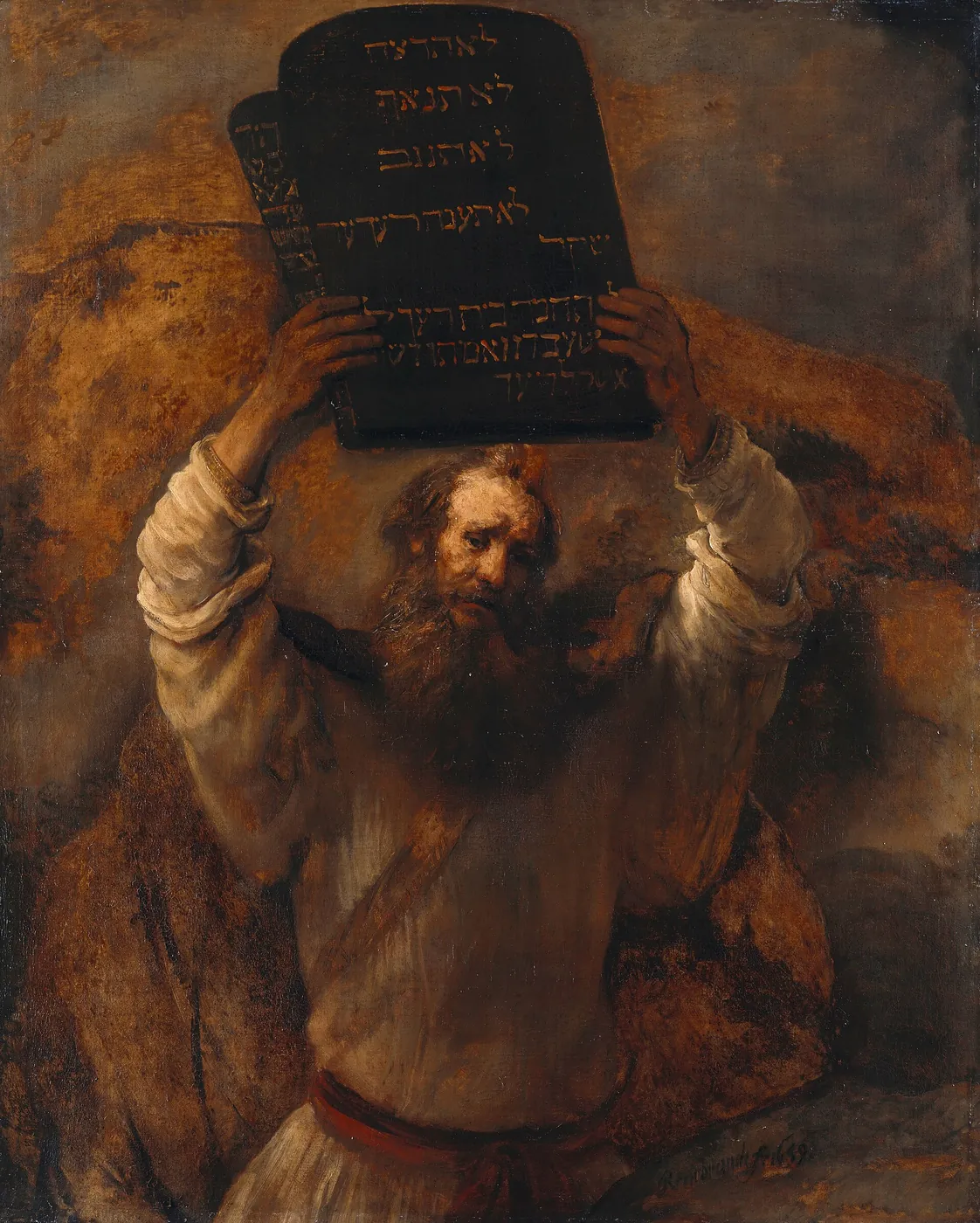
Paul also taught that the law of the Torah ceased to be in force after the crucifixion of Jesus Christ at Golgotha. In his view the law of Mūsā was the source of sin and a form of curse, a teaching absent ab initio from the words of ʿĪsā ibn Maryam, who kept the law and told his hearers to keep it.11
When Jesus Christ was crucified, Paul taught, he “took the curse” of the law upon himself to free humanity from it. In an arrogant tone he also declared:
4κατηργήθητε ἀπὸ Χριστοῦ οἵτινες ἐν νόμῳ δικαιοῦσθε, τῆς χάριτος ἐξεπέσατε.
4Christ is become of no effect unto you, whosoever of you are justified by the law; ye are fallen from grace.12
Paul stressed, further, that Jesus Christ is the end of the law.13
Set these beside the words of ʿĪsā ibn Maryam in the Sermon on the Mount. Whoever breaks the least of the commandments, and teaches others to do the same, shall be called least in the kingdom of heaven:
19ὃς ἐὰν οὖν λύσῃ μίαν τῶν ἐντολῶν τούτων τῶν ἐλαχίστων καὶ διδάξῃ οὕτως τοὺς ἀνθρώπους, ἐλάχιστος κληθήσεται ἐν τῇ βασιλείᾳ τῶν οὐρανῶν· ὃς δʼ ἂν ποιήσῃ καὶ διδάξῃ, οὗτος μέγας κληθήσεται ἐν τῇ βασιλείᾳ τῶν οὐρανῶν.
19Whosoever therefore shall break one of these least commandments, and shall teach men so, he shall be called the least in the kingdom of heaven: but whosoever shall do and teach them, the same shall be called great in the kingdom of heaven.14
Paul did more than relax the least of the commandments. He told his congregations in writing that they were delivered from the law, and the letters that told them so became scripture.
Paul rejected the validity of the law as a condition of salvation, and he also symbolically degraded its worth. In his letter to the Philippians he states plainly:
8ἀλλὰ μενοῦνγε καὶ ἡγοῦμαι πάντα ζημίαν εἶναι διὰ τὸ ὑπερέχον τῆς γνώσεως Χριστοῦ Ἰησοῦ τοῦ κυρίου μου διʼ ὃν τὰ πάντα ἐζημιώθην, καὶ ἡγοῦμαι σκύβαλα ἵνα Χριστὸν κερδήσω
8Yea doubtless, and I count all things but loss for the excellency of the knowledge of Christ Jesus my Lord: for whom I have suffered the loss of all things, and do count them but dung, that I may win Christ,15
The Greek word skubala (σκύβαλα) used here is extremely coarse: it means excrement, refuse, filth. What Paul counts as refuse in this context is more than social or religious standing. It is the whole inheritance of the Torah on which Jewish identity rests, including his own status as a Pharisee and his obedience to the law.
Implicitly, Paul places the law of the Torah in the symbolic category of “spiritual filth” to be cast off to receive what he claims as the knowledge of Christ. The statement shows how radically Paul broke continuity with the earlier law: he went beyond abolishing it in doctrine and demeaned its worth in theology and rhetoric.
Although Paul said he did not oppose the teachings of the Torah, in fact he made himself the chief opponent of its laws.16
Some scholars now read Paul as closing the law to Gentiles while leaving Jews free to keep it.17 The reading rescues his consistency at the cost of his own words. Writing to those “that know the law,” he tells them they are “delivered from the law.”18
He says that he became as one under the law to win those under it, “not being myself under the law,” though he was a Jew born and circumcised.19 At Antioch he rebuked Peter, a Jew, for compelling Gentiles to keep what Peter himself no longer kept, and he counted his own life under the law “but dung.”20 A man who holds the law binding on Jews does not write of it in these terms.
5. Circumcision abolished
On circumcision, Paul stated:
2Ἴδε ἐγὼ Παῦλος λέγω ὑμῖν ὅτι ἐὰν περιτέμνησθε Χριστὸς ὑμᾶς οὐδὲν ὠφελήσει.
2Behold, I Paul say unto you, that if ye be circumcised, Christ shall profit you nothing.21
Although the word of God repeatedly stresses the need for real circumcision,22 Paul boldly abolished the law of circumcision. That contradicts the teaching of ʿĪsā ibn Maryam, recorded in the New Testament itself, where he was circumcised.23
6. The food laws abolished
On the foods God had forbidden in the Torah, such as the flesh of swine, Paul gave his opinion:
14οἶδα καὶ πέπεισμαι ἐν κυρίῳ Ἰησοῦ ὅτι οὐδὲν κοινὸν διʼ ἑαυτοῦ· εἰ μὴ τῷ λογιζομένῳ τι κοινὸν εἶναι, ἐκείνῳ κοινόν.
14I know, and am persuaded by the Lord Jesus, that there is nothing unclean of itself: but to him that esteemeth any thing to be unclean, to him it is unclean.24
25πᾶν τὸ ἐν μακέλλῳ πωλούμενον ἐσθίετε μηδὲν ἀνακρίνοντες διὰ τὴν συνείδησιν,
25Whatsoever is sold in the shambles, that eat, asking no question for conscience sake:25
That is why Luke, his pupil, “composed” a story in which God came to Peter in a dream and told him to eat every animal without exception, lawful or forbidden.26
7. The chosen people redefined
Paul interpreted the concept of the “chosen people,” the elect, as open to every nation, which looks inclusive on the surface. His interpretation often contradicts the original teaching rooted in the Children of Israel as the people God chose to carry the message of tawḥīd (توحيد, “the oneness of God”).
Paul says “there is neither Jew nor Greek.”27 That contradicts the special role of the Children of Israel that ʿĪsā ibn Maryam affirmed:
24ὁ δὲ ἀποκριθεὶς εἶπεν· Οὐκ ἀπεστάλην εἰ μὴ εἰς τὰ πρόβατα τὰ ἀπολωλότα οἴκου Ἰσραήλ.
24But he answered and said, I am not sent but unto the lost sheep of the house of Israel.28
Paul’s statement blurs the real meaning of “chosen” in the tradition of the prophets and reflects an effort to draw more Gentiles into his teaching, even at the price of abandoning a chief principle of earlier revelation.
From this analysis it is plain that Paul made sweeping changes to the teaching of ʿĪsā ibn Maryam to attract Gentiles. His stress on the concept of divinity and on the doctrine of salvation from sin shows the great part Paul played in shaping modern Christian theology.
- 1 Corinthians 1:3. ↩
- The Council of Nicaea in 325 CE established the doctrine that God the Son (Jesus Christ) possesses divinity equal to that of God the Father. ↩
- Romans 8:34; Hebrews 12:2. ↩
- Romans 3:10, 5:8; Galatians 1:4. ↩
- Romans 10:9. ↩
- Romans 10:9 (SBLGNT; KJV). ↩
- Mark 10:45. ↩
- Luke 22:24–27. ↩
- Matthew 19:21 (SBLGNT; KJV). ↩
- Galatians 2:16 (SBLGNT; KJV). ↩
- Romans 4:15; Galatians 2:21, 3:10. ↩
- Galatians 5:4 (SBLGNT; KJV). ↩
- Romans 7:6, 10:4; Galatians 3:24–25. ↩
- Matthew 5:19 (SBLGNT; KJV). ↩
- Philippians 3:8 (SBLGNT; KJV). ↩
- Compare Genesis 17:19; also Matthew 5:17. ↩
- Dale B. Martin, “Paul as Jewish Theologian,” Lecture 16, RLST 152: Introduction to New Testament History and Literature, Open Yale Courses, Yale University, Spring 2009, https://oyc.yale.edu/religious-studies/rlst-152. ↩
- Romans 7:1, 6. ↩
- 1 Corinthians 9:20, where the Greek reads μὴ ὢν αὐτὸς ὑπὸ νόμον (mē ōn autos hypo nomon), a phrase missing from the manuscripts behind the King James Version; Philippians 3:5. ↩
- Galatians 2:14; Philippians 3:5–8. ↩
- Galatians 5:2 (SBLGNT; KJV). ↩
- Genesis 17:13; Deuteronomy 10:16 and 30:6; Jeremiah 4:4. ↩
- Luke 2:21. ↩
- Romans 14:14 (SBLGNT; KJV). ↩
- 1 Corinthians 10:25 (SBLGNT; KJV). ↩
- Acts 10:10–15. ↩
- Galatians 3:28. ↩
- Matthew 15:24 (SBLGNT; KJV). ↩