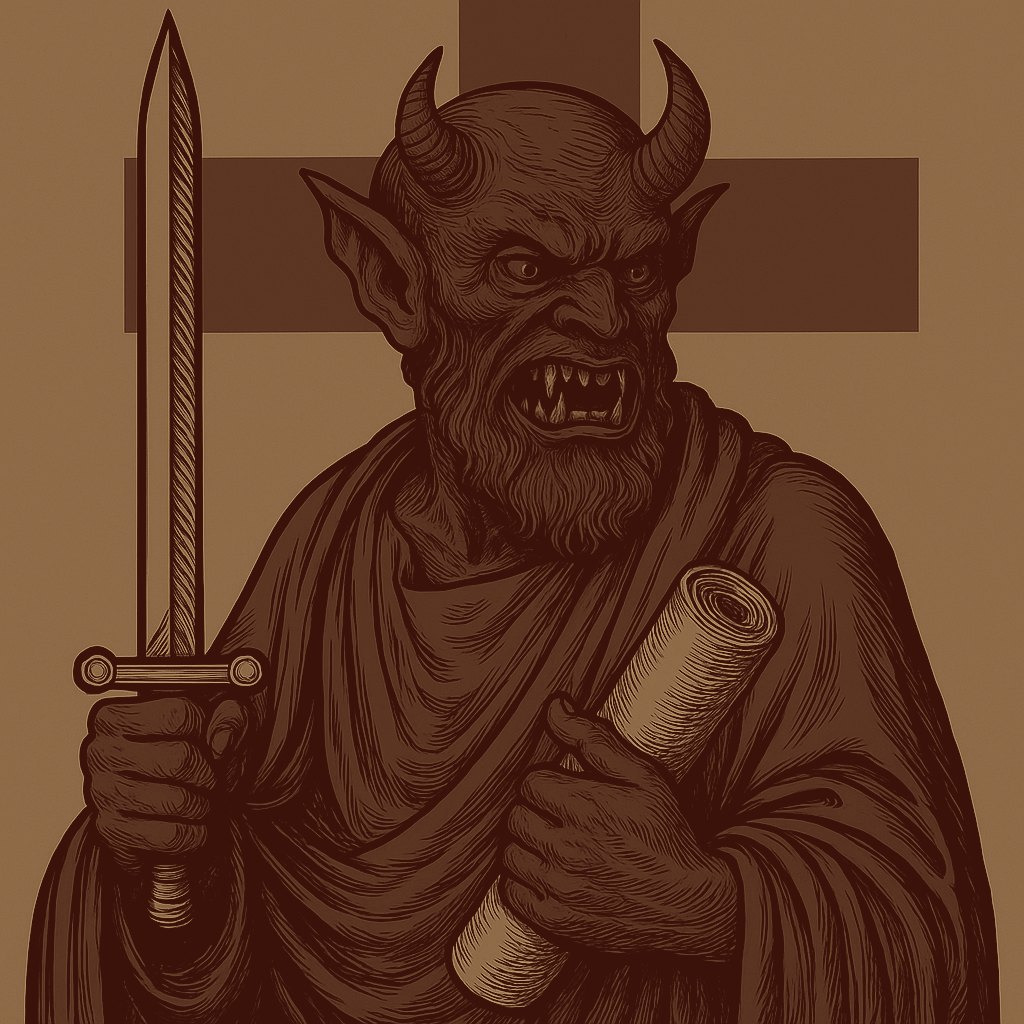
A negative view of Paul is recorded in the classical Islamic sources, which plainly judge him a misleader of the message of ʿĪsā ibn Maryam (ʿalayhi al-salām, peace be upon him).
Sayf ibn ʿUmar
Among the earliest is an important report attributed to Sayf ibn ʿUmar (c. 750–809), an Iraqi historian known for his Kitāb al-Ridda wa-l-Futūḥ. In that manuscript (fols. 62a–64b), Paul, called Abū Shāwil, is portrayed as a falsifier of the teaching of the prophets.
After the deaths of the original followers of ʿĪsā ibn Maryam, Paul rose to claim revelation and seized the leadership by deceit and violence. He spread a new teaching that departed from tawḥīd (توحيد, “the oneness of God”) into regions such as Marāthā and Bordū, while accusing his enemies of being blind and deaf to legitimize himself as an inspired “apostle.”
More alarming, Sayf ibn ʿUmar also records that Paul formed a new sect by writing “sacred books” that reflected his own invented teaching. The sect was known as al-raʿāʿ, the rabble who became the basis of his ideology. The report also states that a small group of believers went on defending the message of tawḥīd, known as the firqah muʾminah ẓāhirah bi-l-ḥujjah, those who came forward with proof and opposed Paul despite persecution.1
Al-Qummī
A firm view of Paul is also shown by ʿAlī ibn Ibrāhīm al-Qummī (d. 919), who lists Paul among the opponents of the message of ʿĪsā ibn Maryam, and never among its supporters. He relates:
ما بعث الله نبيًّا إلا وفي أمته شيطانٌ يؤذيه ويُضلّ الناس، فبعث الله عزّ وجلّ مع كلّ نبيٍّ صاحبًا يقابله… فكان مع عيسى بولس وتمرتيان وبرزتيق.
Mā baʿatha Allāhu nabiyyan illā wa fī ummatih shayṭānun yuʾdhīhi wa yuḍillu al-nās, fa-baʿatha Allāhu ʿazza wa jalla maʿa kulli nabiyyin ṣāḥiban yuqābiluh … fa-kāna maʿa ʿĪsā ibn Maryam Būlus wa Tamartiyān wa Barzatiq.2
God never sent a prophet without there being in his community a devil who harmed him and led people astray. So God, mighty and majestic, appointed for every prophet a counterpart to confront him … and with ʿĪsā ibn Maryam were Paul, Martiyān (Marcion) and Barzatiq.
Although the term used is ṣāḥib (صاحب, “companion”), the context makes plain that it means a rival figure hostile to revelation. Listing Paul with other misguided figures such as Marcion shows that the early Islamic tradition rejected ab initio any notion that Paul held prophetic or apostolic authority in the true religion.
Wahb ibn Munabbih
An interesting tale connected with Paul is related by Wahb ibn Munabbih, through Idrīs the son of Wahb’s daughter, as recorded in the Tārīkh Madīnat Dimashq of Ibn ʿAsākir. In it Paul is portrayed as a leader among the Jews and the harshest opponent of ʿĪsā ibn Maryam. He is said to have gathered an army to kill ʿĪsā ibn Maryam and bar him from entering Damascus.
At a place called Kawkabā an angel struck Paul with its wing and blinded him. Having seen undeniable signs, he finally acknowledged the truth, came to ʿĪsā ibn Maryam and asked for his sight to be restored. ʿĪsā ibn Maryam answered: “How long will you go on harming me and those who are with me?”3
The report is plainly an adaptation of the narrative in Acts (chapters 9, 22 and 26), reworked in the manner of a hikayat with elements of Isrāʾīliyyāt. The basic structure, the vision of light, the blindness and the change in Paul’s attitude, is preserved, but dramatic elements are added, such as a winged angel and direct dialogue with ʿĪsā ibn Maryam.
From the standpoint of Islamic history and theology the report raises serious problems. ʿĪsā ibn Maryam had been raised to heaven before the Religion of Paul appeared, so a picture of him still on earth to meet Paul contradicts the historical reality of his mission according to Islam. Placing ʿĪsā ibn Maryam back into this narrative conflicts with his standing as a Messenger raised by God, and it weakens the credibility of the report as a valid source for judging Paul’s history.
Its original transmitter, Wahb ibn Munabbih, is known to have carried many Isrāʾīliyyāt reports that cannot serve as proof in the discipline of creed. Elements such as “an angel striking with its wing” and the request to restore sight are narrative exaggeration better read as allegory or literary symbolism than as sound historical report.
The report therefore cannot ground the Islamic assessment of Paul. It remains important for showing that in the early Muslim perspective Paul was seen as an enemy of the message who finally submitted, symbolically, to the truth he had long rejected.
The prison called Būlus
Beyond the critical assessment of Paul in Islamic discourse, there is an eschatological hadith that mentions a prison in Hell named Būlus, a name linguistically identical with the Arabic name for Paul (بولس). In the hadith recorded by Aḥmad ibn Ḥanbal, the Messenger of God ﷺ said:
يُحشر الجبارون يوم القيامة أمثال الذر في صور الرجال، يغشاهم الذل من كل مكان، يساقون إلى سجن في جهنم يسمى بولس، تعلوهم نار الأنيار، يسقون من عصارة أهل النار، طينة الخبال.
Yuḥsharu al-jabbārūna yawma al-qiyāmah amthāla al-dharr fī ṣuwari al-rijāl, yaghshāhum al-dhull min kulli makān, yusāqūna ilā sijn fī Jahannam yusammā Būlus, taʿlūhum nāru al-anyār, yusqawna min ʿuṣārat ahli al-nār, ṭīnatu al-khabāl.4
The arrogant will be gathered on the Day of Resurrection like specks of dust in the form of men. Humiliation will cover them from every side, and they will be driven to a prison in Hell called Būlus. The fire of fires will rise over them, and they will be given to drink of the discharge of the people of Hell, the ṭīnat al-khabāl.
Literally the hadith speaks of the punishment of the arrogant, but the appearance of the name Būlus raises a significant question. There is no clear confirmation that Paul is meant.
Yet the combination of the wording, the theme of arrogance and the punishment in Hell allows the interpretation that the use of the name is a deliberate allusion to the figure raised as the founder of a deviant teaching after the message of ʿĪsā al-Masīḥ to the Children of Israel had passed. Connected with the other reports that portray Paul as the enemy of tawḥīd and a misleader of the community, the mention is meaningful linguistically, and it also functions as an eschatological symbol that fixes Paul’s character as the manifestation of deviation in the history of revelation.
The mention of Paul’s name in this context is best understood as an inclusive historiographical adaptation. That becomes plainer as we trace the views of the great scholars of the Islamic tradition, who judged Paul critically and thoroughly, above all when his teaching is examined as a deviation from the message of tawḥīd brought by ʿĪsā ibn Maryam.
Khushaysh ibn Aṣram
One of the earliest records that explicitly connects Paul with the corruption of religion appears in a fragment of a ninth-century heresiographical work, the Kitāb al-Istiqāmah fī al-Radd ʿalā Ahl al-Bidaʿ of Abū ʿĀṣim Khushaysh ibn Aṣram al-Nasāʾī (d. 867). In the passage cited by Ibn Taymiyyah and al-Malaṭī, it is stated that the Rāfiḍah sought to destroy Islam just as “Paul son of Joshua, the king of the Jews, corrupted the religion of the Christians.”5
Paul of Tarsus is portrayed here in an Arabized form (taʿrīb) to stress his Jewish origin and his role as the chief distorter of the message of ʿĪsā ibn Maryam. The narrative also mentions that ʿAlī ibn Abī Ṭālib burned alive the ghulāt who deified him, while a figure such as ʿAbd Allāh ibn Sabaʾ was only exiled to Sabāṭ, establishing a hierarchy of heresy that echoes the structure of the threat Paul himself posed.6 As Paul is connected with the spread of the doctrine of the Trinity and the abolition of the law, Ibn Sabaʾ became the local analogy for a similar pattern of corruption creeping into the body of the Muslim community from within.
Al-Qāḍī ʿAbd al-Jabbār
In the Tathbīt Dalāʾil al-Nubuwwa (Confirmation of the Proofs of Prophethood), al-Qāḍī ʿAbd al-Jabbār (932–1025) records two distinct but complementary pictures of the corruption Paul brought.
First, he states directly that Paul introduced the doctrine of the divinity of ʿĪsā ibn Maryam to the Romans:
فإن بولس هو من فسق بالإنجيل، وكتب إلى بلدة من بلاد الروم أنه يقتضي الرأي أن نزعم أن الله تعالى اتخذ ولدًا، فصار ذلك دينًا لأهل الروم.
Fa-inna Būlusa huwa man fasaqa bi-l-Injīl, wa kataba ilā baldah min bilād al-Rūm annahu yaqtaḍī al-raʾyu an nazʿuma anna Allāha Taʿālā ittakhadha waladan, fa-ṣāra dhālika dīnan li-ahli al-Rūm.7
Paul is the one who corrupted the Gospel. He wrote to a city in the land of the Romans that reason requires us to claim that God Most High has taken a son, and that became the religion of the people of Rome.
Then, in a longer and more comprehensive passage, he explains how Paul replaced the law of the disciples with a permissive, worldly religion strengthened by political influence:
فإن بولس هو من فسق بالإنجيل وبدّل الشرع، وفتح للناس باب الإباحة، وجعل ما كانوا عليه من العادات دينًا يدينون به، حتى قال لهم: إن الختان ليس بواجب عليكم، وإن السبت لا يلزمكم تعظيمه، وإن الخمر مباح لكم. وكان قد دخل على قيصر، فأكرمه وقوّاه، فاستجاب له من استجاب، وتبعوه، وتركوا ما كان عليه أصحاب المسيح من الدين والشريعة والورع والزهد.
Fa-inna Būlusa huwa man fasaqa bi-l-Injīl wa baddala al-sharʿ, wa fataḥa li-l-nāsi bāba al-ibāḥah, wa jaʿala mā kānū ʿalayhi mina al-ʿādāt dīnan yadīnūna bih, ḥattā qāla lahum: “Inna al-khitāna laysa bi-wājibin ʿalaykum, wa inna al-sabta lā yalzamukum taʿẓīmuhu, wa inna al-khamra mubāḥun lakum.” Wa kāna qad dakhala ʿalā Qayṣar, fa-akramahu wa qawwāhu, fa-istajāba lahu man istajāba, wa tabiʿūhu, wa tarakū mā kāna ʿalayhi aṣḥābu al-Masīḥ mina al-dīn wa al-sharīʿah wa al-waraʿ wa al-zuhd.8
Paul is the one who corrupted the Gospel and altered the law. He opened for the people the door of permissiveness, and made the customs they had followed into a religion for them to profess, until he told them: “Circumcision is not obligatory for you, you need not honor the Sabbath, and wine is lawful for you.” He had gone in to Caesar, who honored him and strengthened him. So those who answered him answered, and followed him, and abandoned the religion, the law, the piety and the asceticism the companions of al-Masīḥ had held.
That gives a clear picture: from the Islamic standpoint, Paul wrecked the ethical, legal and doctrinal structure brought by ʿĪsā ibn Maryam and replaced it with an invented religion fit for acceptance by the Roman Empire.
Ibn Taymiyyah, al-Qaysī and al-Shahrastānī
Shaykh al-Islām Ibn Taymiyyah (1263–1328) said of Paul:
وذلك مثل ما وضعه بولس حين دخل في دين النصارى، ولبّس عليهم ليُضلهم.
Wa dhālika mithlu mā waḍaʿahu Būlus ḥīna dakhala fī dīn al-naṣārā, wa labbasa ʿalayhim li-yuḍillahum.9
That is like what Paul fabricated when he entered the religion of the Christians and confused them to lead them astray.
The statement supports the view that Paul was no messenger of God, and it places him in the line of those who corrupted the message of heaven from within.
A more dramatic narrative appears in the Kitāb Miftāḥ al-Dīn wa-l-Mujādalah bayna al-Naṣārā wa-l-Muslimīn of Muḥammad al-Qaysī (c. 1252–1309). He accuses Paul and seven followers of killing the monotheist followers of ʿĪsā ibn Maryam and starting the doctrine of the Trinity by cunning. The church, in his account, hid the true Gospel, which contained the tidings of the coming of the Prophet Muḥammad.10
Al-Shahrastānī (1086–1153), a scholar of the Ashʿarī school, had earlier confirmed what Ibn Taymiyyah later said:
وإنما خلط بولس أمره، وشارك بطرس في دعواه، وبدّل أصول علمه، وخلطها بأقاويل الفلاسفة ووساوس النفس.
Wa innamā khalaṭa Būlus amrahū, wa shāraka Buṭrus fī daʿwāh, wa baddala uṣūla ʿilmih, wa khalaṭahā bi-aqāwīl al-falāsifah wa wasāwisi al-nafs.11
Paul confused his affair, joined Peter in his claim, altered the foundations of his knowledge, and mixed them with the sayings of the philosophers and the whisperings of the self.
From the Islamic standpoint, ʿĪsā ibn Maryam was a Messenger of God who called to tawḥīd and obeyed the law of the Torah, like the prophets before him. The Qurʾān affirms that all the prophets delivered the same message: the oneness of God and obedience to His law.12 Paul, who stressed belief alone, abandoned the practice that is the pillar of the prophets’ law, and taught the divinity of ʿĪsā ibn Maryam, is seen as the man who wrecked the authenticity of that teaching.
In the Islamic frame, too, the concept of God lies beyond human thought without limit and cannot be embodied in a human being or any other creature. Paul’s teaching, which raised Jesus Christ to “Son of God” and even to God incarnate in a human body, is the greatest violation of the principle of tawḥīd. Islam rejects in the strongest terms every anthropomorphic element in theology, whether the picture of God as “Father” or the claim that God “came down” to the world in a human form that could feel hunger and thirst, weep, and die.
- Sayf ibn ʿUmar, Kitāb al-Ridda wa-l-Futūḥ, manuscript (fols. 62a–64b), cited in Pieter S. van Koningsveld, “The Islamic Image of Paul and the Origins of the Gospel of Barnabas,” Jerusalem Studies in Arabic and Islam, vol. 20 (1996), pp. 222–225. See also Sean W. Anthony, “The Composition of Sayf b. ʿUmar’s Account of King Paul and His Corruption of Ancient Christianity,” Der Islam, vol. 85 (2010), pp. 164–202, which discusses the arrangement of Sayf’s narrative and its portrayal of Paul as a figure who feigned repentance before diverting the teaching of ʿĪsā ibn Maryam. ↩
- ʿAlī ibn Ibrāhīm al-Qummī, Tafsīr al-Qummī, ed. Ṭayyib al-Mūsawī al-Jazāʾirī (Beirut: Dār al-Walāʾ li-Ṣināʿat al-Nashr, 2018), vol. 1, p. 49. Also online: https://bit.ly/2RMHR9S (accessed 24 May 2025). ↩
- Ibn ʿAsākir, Abū al-Qāsim ʿAlī ibn Ḥasan al-Shāfiʿī, Tārīkh Madīnat Dimashq, vol. 5 (Beirut: Dār al-Fikr, 1995), p. 333: «كان بولس من رؤساء اليهود وأشدهم بأسًا وأعظمهم شأنًا في إنكار ما جاء به المسيح عليه السلام ودفعه ودفع الناس عنه، فجمع العساكر وسار إلى المسيح عليه السلام ليقتله ويمنعه عن دخول دمشق، فلقيه بكوكبا، فضربه ملك بجناحه فأعماه، ورأى من دلائل أمره والأحوال التي لم يصل معها إلى ما أراد من مكروهه ما اضطره إلى الإيمان به والتصديق بما جاء به. فأتى المسيح على ذلك وسأله أن يفتح عينيه، فقال له المسيح: كم تسعى في أذاي وأذى من هو معي؟» ↩
- See Musnad Aḥmad, vol. 6, p. 232; Jāmiʿ al-Tirmidhī, no. 2492; al-Adab al-Mufrad, no. 557; al-Sunan al-Kubrā, no. 11827. The hadith is graded ḥasan ṣaḥīḥ by the scholars of hadith. ↩
- Ibn Taymiyyah, Minhāj al-Sunnah al-Nabawiyyah, vol. 1, p. 29; cf. al-Malaṭī, al-Tanbīh wa-l-Radd ʿalā Ahl al-Ahwāʾ wa-l-Bidaʿ, p. 118. ↩
- ibid. ↩
- al-Qāḍī ʿAbd al-Jabbār, Tathbīt Dalāʾil al-Nubuwwa, in Critique of Christian Origins: A Parallel Arabic-English Text, ed. Gabriel Said Reynolds and Samir Khalil Samir (Provo, Utah: Brigham Young University Press, 2010), p. 153. ↩
- ibid., p. 183. ↩
- Ibn Taymiyyah, Majmūʿ al-Fatāwā, vol. 28, comp. ʿAbd al-Raḥmān ibn Qāsim (Riyadh: al-Riʾāsah al-ʿĀmmah li-Idārat al-Buḥūth al-ʿIlmiyyah wa-l-Iftāʾ, 1416/1995), p. 483. ↩
- Muḥammad al-Qaysī, Kitāb Miftāḥ al-Dīn wa-l-Mujādalah bayna al-Naṣārā wa-l-Muslimīn, MS 1557, National Library of Algeria, pp. 49–90; summarized in P. S. van Koningsveld, op. cit. ↩
- See al-Shahrastānī, Kitāb al-Milal wa al-Niḥal, ed. Muḥammad Sayyid Kaylānī, vol. 1 (Beirut: Dār al-Maʿrifah, n.d.), p. 264. Also cited in William Montgomery Watt, Muslim-Christian Encounters: Perceptions and Misconceptions (Routledge, 1991), p. 69. ↩
- See Sūrah al-Baqarah 2:285. ↩