
The first two articles on Paul’s character gathered his perjury, his curses, his hatreds and the order he prescribed for slaves and subjects. This one turns to the flesh: what he confessed of his own body, what his letters reveal of his preoccupations, the licence his doctrine gave, and what the earliest witnesses and the latest readers have made of it. His contempt for marriage and the thorn in his flesh are examined under Count·III, and are cited here without repetition.5
One limit governs the whole article. No source, hostile or friendly, records a sexual act of Paul’s. What the record holds is his own account of a war inside his body, the vocabulary in which he fought it, the doctrine of licence he preached to others, and one ancient accusation about his motives.
The deviance is documented in the mind and in the teaching. The reader will judge what it implies of the life.
The war within
Paul describes himself as a man at war with his own members. The law of his mind is at war with the law in his members, which brings him into captivity to the law of sin; the good he would do, he does not; the evil he would not, he does.6 He tells the Corinthians that he beats his body and brings it into subjection, lest having preached to others he should himself be a castaway.7
27ἀλλὰ ὑπωπιάζω μου τὸ σῶμα καὶ δουλαγωγῶ, μή πως ἄλλοις κηρύξας αὐτὸς ἀδόκιμος γένωμαι.
27But I keep under my body, and bring it into subjection: lest that by any means, when I have preached to others, I myself should be a castaway.1
The Greek is hypōpiazō (ὑπωπιάζω), to strike under the eye, to bruise. Whatever Paul’s body wanted, he answered it with blows.
To the Galatians he generalized the war into doctrine: the flesh lusts against the spirit and the spirit against the flesh, so that ye cannot do the things that ye would.8 A man who cannot do what he would, and who bruises his body to keep it from doing what it would, has told the reader as much as he can bear to.
The vocabulary of lust
The same man returns, letter after letter, to catalogues of the sins of the body. To the Romans he describes at length the vile affections of women who changed the natural use, and of men who burned in their lust one toward another, “men with men working that which is unseemly.”9
26Διὰ τοῦτο παρέδωκεν αὐτοὺς ὁ θεὸς εἰς πάθη ἀτιμίας· αἵ τε γὰρ θήλειαι αὐτῶν μετήλλαξαν τὴν φυσικὴν χρῆσιν εἰς τὴν παρὰ φύσιν, 27ὁμοίως τε καὶ οἱ ἄρσενες ἀφέντες τὴν φυσικὴν χρῆσιν τῆς θηλείας ἐξεκαύθησαν ἐν τῇ ὀρέξει αὐτῶν εἰς ἀλλήλους, ἄρσενες ἐν ἄρσεσιν τὴν ἀσχημοσύνην κατεργαζόμενοι καὶ τὴν ἀντιμισθίαν ἣν ἔδει τῆς πλάνης αὐτῶν ἐν ἑαυτοῖς ἀπολαμβάνοντες.
26For this cause God gave them up unto vile affections: for even their women did change the natural use into that which is against nature: 27And likewise also the men, leaving the natural use of the woman, burned in their lust one toward another; men with men working that which is unseemly, and receiving in themselves that recompence of their error which was meet.2
To the Corinthians he lists fornicators, idolaters, adulterers, “effeminate,” and “abusers of themselves with mankind” among those who shall not inherit the kingdom, and adds: “and such were some of you.”10 To the Galatians the works of the flesh begin with adultery, fornication, uncleanness and lasciviousness.11 The gospels record ʿĪsā ibn Maryam (ʿalayhi al-salām, peace be upon him) condemning lust once, in a sentence about the eye and the heart.12
Paul could not leave the subject alone. The word arsenokoitai, which no Greek writer before him used, is his coinage; the preoccupation is his signature.
Licence
The paradox of Paul’s doctrine is that the man who bruised his body preached that everything was permitted. “All things are lawful unto me,” he tells the Corinthians twice; nothing is unclean of itself; “unto the pure all things are pure.”13
12Πάντα μοι ἔξεστιν· ἀλλʼ οὐ πάντα συμφέρει. πάντα μοι ἔξεστιν· ἀλλʼ οὐκ ἐγὼ ἐξουσιασθήσομαι ὑπό τινος.
12All things are lawful unto me, but all things are not expedient: all things are lawful for me, but I will not be brought under the power of any.3
Al-Qāḍī ʿAbd al-Jabbār named the consequence a thousand years ago: Paul “opened for the people the door of permissiveness,” told them circumcision was not required, the Sabbath not binding and wine lawful, and made their customs into a religion.14 The Arabic is ibāḥah (إباحة, “permissiveness”), the doctrine that what the law forbade is allowed.
The fruit at Corinth
The door, once opened, admitted what one would expect. The church Paul founded at Corinth, and instructed that all things were lawful, produced within a few years a case of incest “such as is not so much as named among the Gentiles, that one should have his father’s wife,” and the congregation was puffed up about it.15
1Ὅλως ἀκούεται ἐν ὑμῖν πορνεία, καὶ τοιαύτη πορνεία ἥτις οὐδὲ ἐν τοῖς ἔθνεσιν, ὥστε γυναῖκά τινα τοῦ πατρὸς ἔχειν. 2καὶ ὑμεῖς πεφυσιωμένοι ἐστέ, καὶ οὐχὶ μᾶλλον ἐπενθήσατε, ἵνα ἀρθῇ ἐκ μέσου ὑμῶν ὁ τὸ ἔργον τοῦτο ποιήσας;
1It is reported commonly that there is fornication among you, and such fornication as is not so much as named among the Gentiles, that one should have his father’s wife. 2And ye are puffed up, and have not rather mourned, that he that hath done this deed might be taken away from among you.4
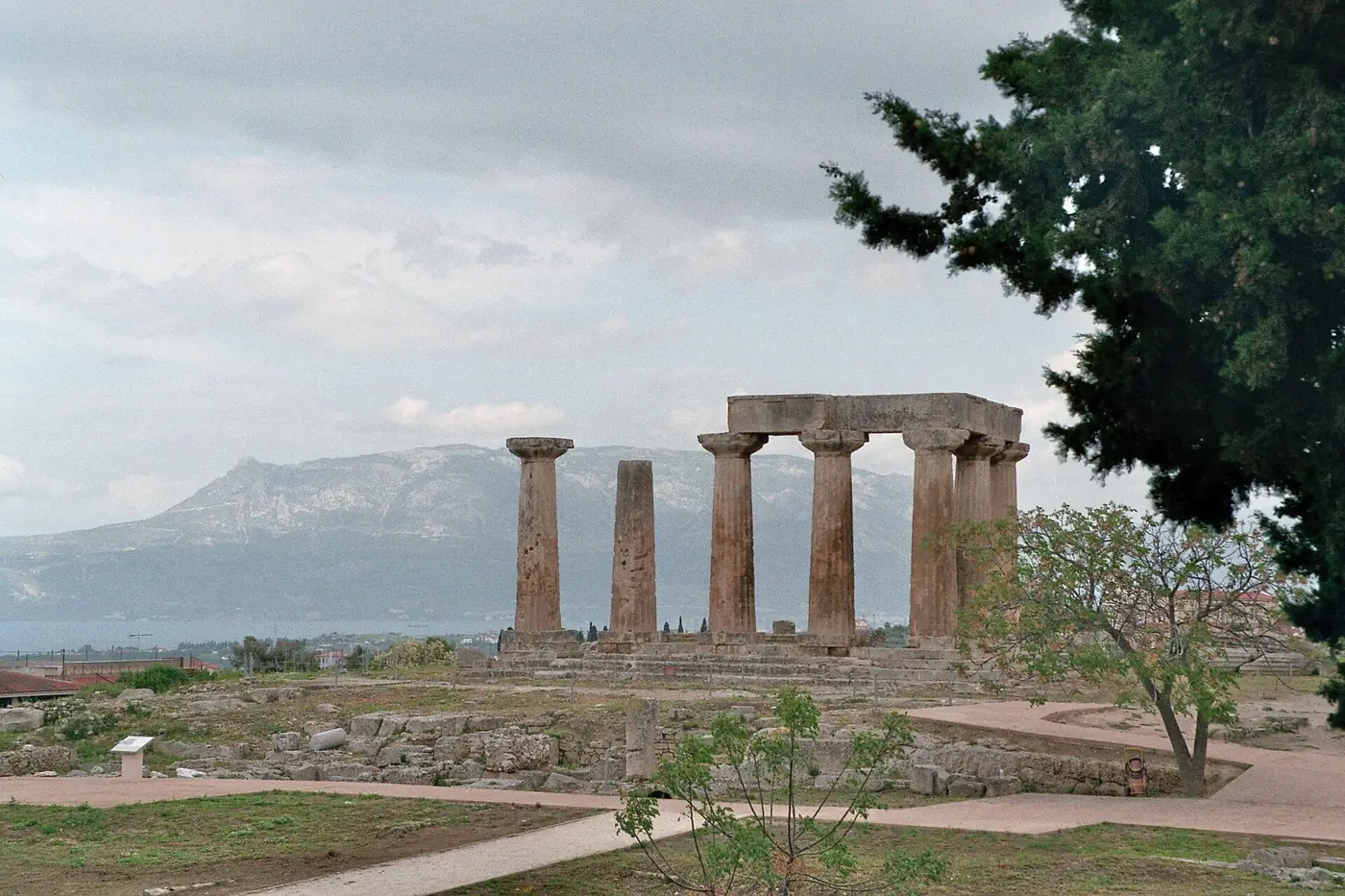
Members of the same church were going to prostitutes, and Paul had to ask them whether they did not know that he who is joined to a harlot is one body with her.16 At the Lord’s supper, one was hungry and another was drunken.17
The letter that says “all things are lawful” is the letter that has to deal with incest, prostitution and drunkenness in the assembly that believed it. The fruit is the test, and these are the fruits of the first church built on Paul’s doctrine.
The oldest accusation
The community that James led kept a memory of Paul’s motives that the church later suppressed. Epiphanius, writing against the Ebionites in the fourth century, records their tradition from a text called the Ascents of James: that Paul was a Gentile of Tarsus who converted to Judaism to marry the daughter of the high priest, was circumcised for her sake, and when refused, turned in anger against circumcision, the Sabbath and the law.18
The story cannot be verified and Epiphanius reports it to refute it. What it establishes is that the earliest witnesses, the followers of ʿĪsā ibn Maryam who kept his law, explained Paul’s apostasy from the law by a thwarted desire. They saw, at the root of his doctrine, a woman he could not have.
The modern readings
Modern readers have looked at the same evidence, the war within, the bruised body, the vocabulary, the thorn, the horror of marriage, and reached a conclusion the Ebionites did not. John Shelby Spong, an Anglican bishop, argued that Paul was a homosexual man who never acted on his desire and spent his life at war with it: “A rigidly controlled gay male, I believe, taught the church what the love of God means.” He added that he saw “no evidence to suggest that Paul ever acted out his sexual desires and passions,” and that nothing else could account for Paul’s self-judging rhetoric, his negative feeling toward his own body, and his sense of being controlled by something he had no power to change.19
The book on which this site rests cites the same possibility from Ehrman and Engberg-Pedersen, and adds the act of circumcising the adult Timothy with his own hands, by a man who had abolished circumcision, as a further shadow over his orientation and motives.20 Whether the desire Paul bruised was for women or for men, the readings agree on the war, and on its issue: a theology in which the body is the enemy and marriage a concession to weakness.
The Islamic measure
Islam names the body a trust and desire a part of the fiṭrah (فطرة, “the natural constitution”) on which God created humankind, to be governed by law and satisfied in marriage.21 The Qurʾān commands the believers to marry the unmarried among them, and names among the signs of God that He made mates for them, that they might find rest in them, with affection and mercy between them.22
وَمِنْ ءَايَـٰتِهِۦٓ أَنْ خَلَقَ لَكُم مِّنْ أَنفُسِكُمْ أَزْوَٰجًا لِّتَسْكُنُوٓا۟ إِلَيْهَا وَجَعَلَ بَيْنَكُم مَّوَدَّةً وَرَحْمَةً
“And of His signs is that He created for you from yourselves mates that you may find tranquillity in them; and He placed between you affection and mercy.”23
Of the monasticism that grew from Paul’s theology of the body, the Qurʾān says that they invented it; God did not prescribe it for them.24 The prophets married, and the last of them said that whoever turned away from his practice was none of his.25
Paul bruised his body, loathed marriage, licensed everything and coined a word for the sin he could not stop naming. The Qurʾān’s measure finds, in that record, a man at war with the constitution God gave him; and a man at war with the fiṭrah is no guide to it.
- 1 Corinthians 9:27 (SBLGNT; KJV). ↩
- Romans 1:26–27 (SBLGNT; KJV). ↩
- 1 Corinthians 6:12 (SBLGNT; KJV). ↩
- 1 Corinthians 5:1–2 (SBLGNT; KJV). ↩
- 1 Corinthians 7:1–9; 2 Corinthians 12:7. See The letters of a man. ↩
- Romans 7:15–24, quoted in full under Count·V; see How Paul came to own the New Testament. ↩
- 1 Corinthians 9:27. ↩
- Galatians 5:17. ↩
- Romans 1:24–27. ↩
- 1 Corinthians 6:9–11. The two Greek terms are malakoi (μαλακοί) and arsenokoitai (ἀρσενοκοῖται), the second a word first attested in Paul. ↩
- Galatians 5:19–21. ↩
- Matthew 5:28. ↩
- 1 Corinthians 6:12; 10:23; Romans 14:14; Titus 1:15, the last from his school. ↩
- al-Qāḍī ʿAbd al-Jabbār, Tathbīt Dalāʾil al-Nubuwwa, in Reynolds and Samir (eds.), Critique of Christian Origins (Provo, Utah: Brigham Young University Press, 2010), p. 183; quoted in full under The early Islamic record. ↩
- 1 Corinthians 5:1–2. ↩
- 1 Corinthians 6:15–16. ↩
- 1 Corinthians 11:21. ↩
- Epiphanius of Salamis, Panarion 30.16.8–9; see Who was Paul of Tarsus? and The first witnesses against Paul. The text Epiphanius cites no longer survives. ↩
- John Shelby Spong, Rescuing the Bible from Fundamentalism: A Bishop Rethinks the Meaning of Scripture (San Francisco: Harper, 1991), in the chapter on Paul. Spong credits the suggestion to Arthur Darby Nock’s St. Paul (1938). ↩
- Acts 16:3; see The letters of a man, with Bart D. Ehrman, Peter, Paul and Mary Magdalene (New York: Oxford University Press, 2006) and Troels Engberg-Pedersen, Paul and the Stoics (Edinburgh: T&T Clark, 2000). ↩
- Sūrah al-Rūm 30:30. ↩
- Sūrah al-Nūr 24:32; Sūrah al-Rūm 30:21. ↩
- Sūrah al-Rūm 30:21, Saheeh International. ↩
- Sūrah al-Ḥadīd 57:27. ↩
- Ṣaḥīḥ al-Bukhārī 5063. ↩