
Paul of Tarsus, called Saul of Tarsus before his call and Paul the Apostle, Saint Paul or St Paul by the church, is the man this site puts on trial. This page gathers his story, the main facts of his life, his journeys, his letters, his legacy and his picture in one place. Every section links to the evidence. His own letters and the Acts of the Apostles are the primary sources, and nothing here goes beyond them without saying so. Behind it all stands one question: what Paul made of the message of ʿĪsā ibn Maryam ʿalayhi al-salām, peace be upon him.
The story of Saul and Paul in the Bible: a summary #
The Bible tells Paul’s story in two voices. Acts introduces a young man named Saul, a Pharisee from Tarsus, at the stoning of Stephen (Acts 7:58). He then hunts the followers of ʿĪsā ibn Maryam from house to house. Near Damascus he is struck down by a light and a voice, and he begins to preach what he had tried to destroy. From Antioch he travels with Barnabas to Cyprus and Asia Minor, then on his own into Greece, to Ephesus and Corinth, until an arrest in Jerusalem sends him to Rome as a prisoner. His letters tell the same life from the inside, and in places they do not agree with Acts. The biography follows both.
Full evidence: Who was Paul of Tarsus? and Timeline of Paul’s life
Ten facts about Saint Paul #
- He was born in Tarsus in Cilicia (Acts 22:3), of the tribe of Benjamin (Philippians 3:5).
- He was a Pharisee and says he studied in Jerusalem under Gamaliel (Acts 22:3).
- He carried two names, the Hebrew Saul and the Roman Paul. Acts switches from one to the other at Cyprus (Acts 13:9).
- He persecuted the followers of ʿĪsā ibn Maryam and was present at the death of Stephen (Galatians 1:13; Acts 8:1).
- He never met Jesus in his lifetime. He claims one vision of the risen Christ (1 Corinthians 15:8).
- He was a tentmaker by trade and worked with his hands (Acts 18:3).
- Acts gives him three journeys across Asia Minor and Greece, with about two years in Ephesus and a year and a half in Corinth.
- His letters are the earliest texts of the New Testament, and thirteen of them carry his name.
- He was arrested in Jerusalem, held two years at Caesarea, and appealed to Caesar (Acts 25:11).
- He died in Rome, and later tradition says he was beheaded under Nero. No book of the New Testament records his death.
Names: Saul of Tarsus, Paul the Apostle, Saint Paul #
Saul of Tarsus (sometimes mistyped Saul of Taurus, after the mountains behind the city) is the name of the persecutor and Paul the Apostle the name of the missionary, though they are one man. He calls himself “the apostle of the Gentiles” (Romans 11:13). Catholic and Orthodox churches call him Saint Paul, written St Paul, and the cities, schools and churches that bear the name honour him in that sense. The system of belief that grew from his letters is called Pauline Christianity, Paulinism or, by its critics, Paulism. It is the subject of this site.
Full evidence: The Roman: name and tongue and Glossary
Paul’s journeys and travels #
The route is in the timeline, with its map of the eastern Mediterranean. In outline:
- Damascus and Arabia. He says he went into Arabia after his call, and returned to Damascus (Galatians 1:17).
- Tarsus and Antioch. He preached in Syria and Cilicia, and Barnabas brought him to Antioch, where the disciples were first called Christians (Acts 11:25–26).
- Cyprus and Galatia. The first journey with Barnabas (Acts 13–14).
- Philippi, Thessalonica and Athens. The second journey into Greece (Acts 16–17).
- Corinth. A year and a half there (Acts 18:11).
- Ephesus. About two years in Ephesus, from where “all they which dwelt in Asia heard the word” (Acts 19:10).
- Jerusalem and Caesarea. His arrest, and two years’ custody (Acts 21–24).
- Malta. The shipwreck on the voyage to Rome, and the viper on his hand (Acts 27–28).
- Rome. Two years under house arrest, where Acts leaves him (Acts 28:30–31). He planned to go on to Spain (Romans 15:24), but no source says he did.
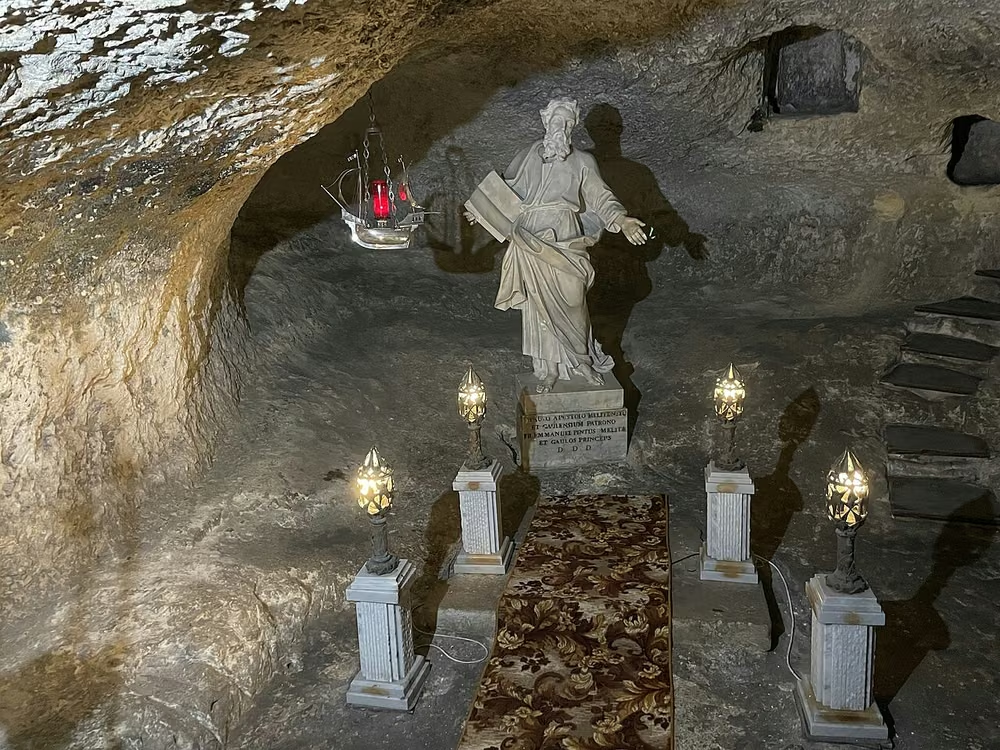
Full evidence: Timeline of Paul’s life and The parting with Barnabas, and open conflict with Peter
Paul’s letters, books and teachings #
Thirteen of the New Testament’s twenty-seven books carry Paul’s name, and scholars agree that he wrote seven of them: Romans, 1 and 2 Corinthians, Galatians, Philippians, 1 Thessalonians and Philemon. They are older than any Gospel, and they are where the church’s doctrines begin. Paul calls his message “my gospel” (Romans 2:16) and says he received it by revelation and not from any man (Galatians 1:11–12). His teachings, in short: that a man is justified by faith and not by works of the law, that the death of Christ atones for sin, and that Christ is Son and Lord.
Full evidence: How Paul came to own the New Testament and Seven doctrines: God, the cross and faith
Paul’s death #
The New Testament does not say how or when Paul died. Tradition places his execution in Rome under Nero, in the years 62 to 67, by the sword. The earliest hint is a line in 1 Clement from the 90s.
Full evidence: A death the scriptures never record
Paul’s legacy: importance, impact and influence on Christianity #
His accomplishments are large, and nobody disputes them. He carried the message out of Judaea to the Gentile cities of the empire. He founded or visited churches across Asia Minor and Greece. He wrote the earliest books of the New Testament, and his reading of the message became the church’s. The question this site raises is what that contribution was worth. Its case is that his significance lies in what he added: doctrines that ʿĪsā ibn Maryam never taught, and a religion built on Paul’s own account of a vision no one else saw.
Full evidence: The church that followed Paul and The Verdict
Quotations from Paul #
Five of his own sentences, in the King James Version, each of which is argued in an article on this site.
For I neither received it of man, neither was I taught it, but by the revelation of Jesus Christ.
Galatians 1:12
And last of all he was seen of me also, as of one born out of due time.
1 Corinthians 15:8
Therefore we conclude that a man is justified by faith without the deeds of the law.
Romans 3:28
But though we, or an angel from heaven, preach any other gospel unto you than that which we have preached unto you, let him be accursed.
Galatians 1:8
For such are false apostles, deceitful workers, transforming themselves into the apostles of Christ.
2 Corinthians 11:13
Pictures, photos and images of Paul #
Anyone looking for a pic of Paul will find that none was made in his lifetime. The images that exist were made by the church, centuries later, and by convention they show him bald and bearded, holding a sword and a book. The sword stands for his execution and the book for his letters. This site has photographs of the originals in place, from catacomb paintings to the churches of Rome.

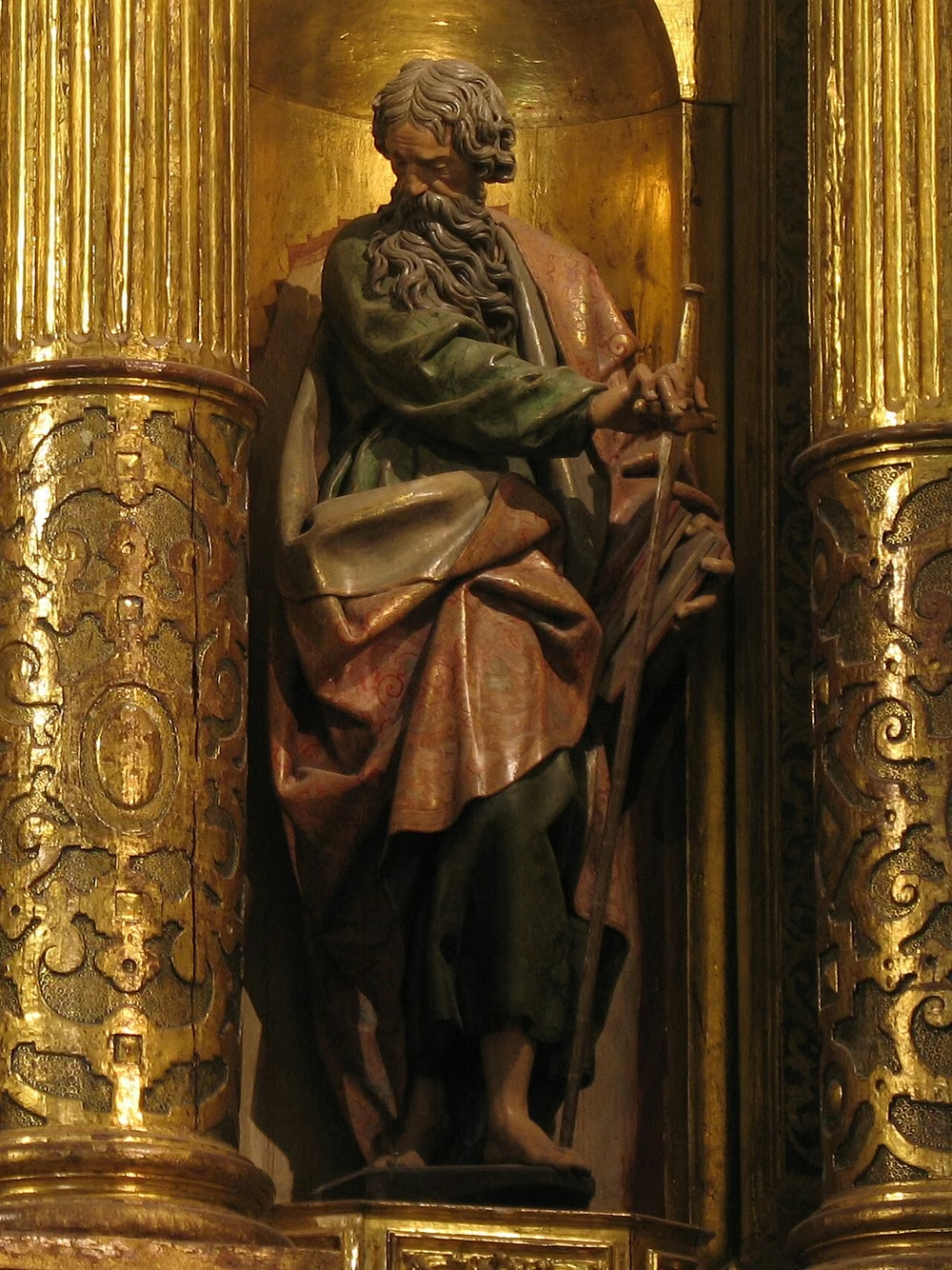
Full evidence: Paul in the churches
Paul and Jesus #
Paul was not one of the Twelve and never met ʿĪsā ibn Maryam in his life. His letters quote the sayings of Jesus only a few times (1 Corinthians 7:10; 9:14; 11:23–25). The case is that Paul’s religion is not the religion of Jesus, and the first community of ʿĪsā’s followers, led by James, rejected his gospel.
Full evidence: did-paul-ever-meet-jesus, James, the brother of ʿĪsā ibn Maryam and The Jerusalem Council
Paul in Islam #
The Quran does not name Paul. Muslim scholars from the ninth century on, among them Ibn Ḥazm, judged him the man who corrupted the religion of ʿĪsā ibn Maryam. Their testimony is gathered under the witnesses.
Full evidence: No prophet between me and ʿĪsā ibn Maryam and The early Islamic record
Primary sources and further reading #
The primary sources for Paul are his seven undisputed letters, the Acts of the Apostles, and later writers such as Clement of Rome, Tertullian and Eusebius. The scholarship the case draws on, including books critical of Paul, is listed in the sources, and the book behind this site is described under The Book.