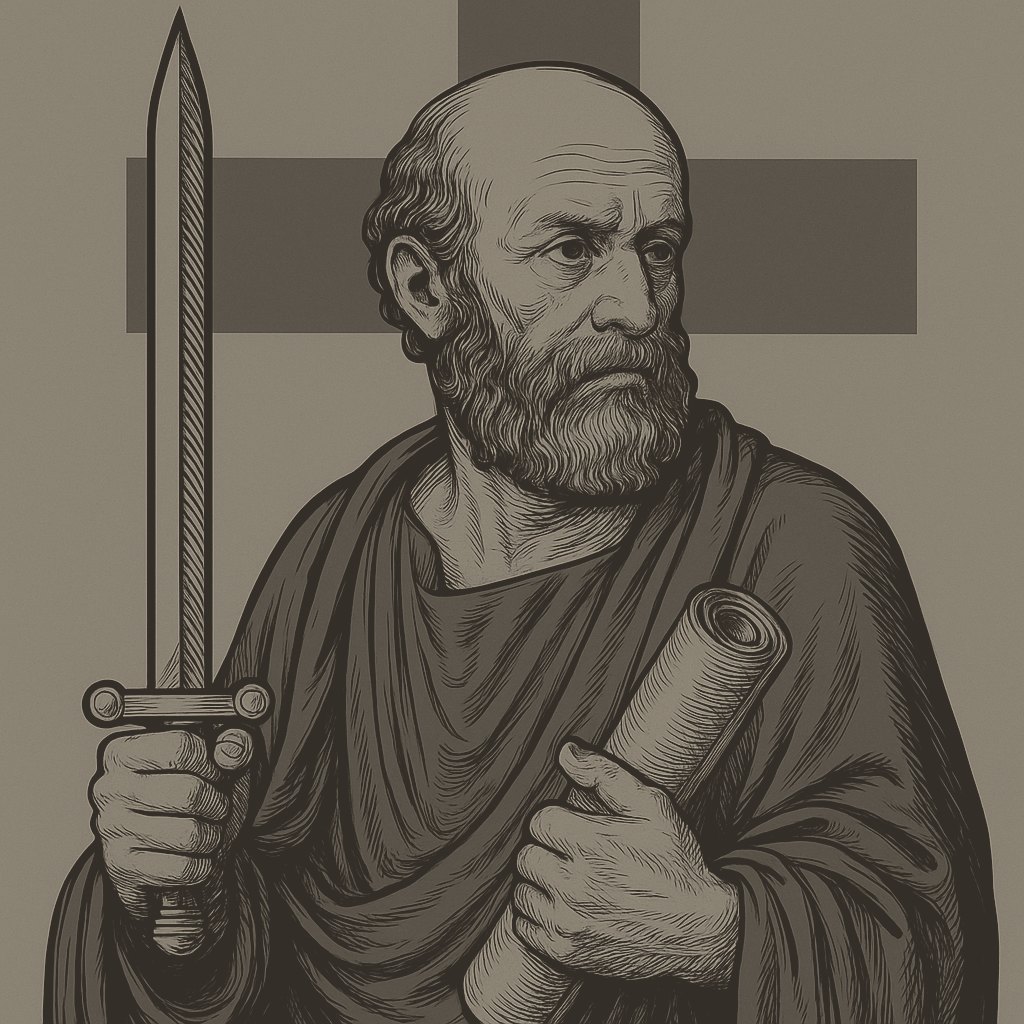
Paul carried two names, spoke three languages and held a citizenship that most of the men he preached to could never obtain. The profile of Paul sets out what the sources allow about his birth, his family and his training.5 This article follows the Roman in him: how the name, the tongues and the citizenship were used, and what their use reveals.
Two names
Acts calls him Saul for twelve chapters and Paul for the rest. The change is made in a single verse, on Cyprus, in the house of the Roman proconsul Sergius Paulus: “Then Saul, (who also is called Paul,).”6 From that verse the Hebrew name disappears from the narrative, and the Latin name that matched the governor’s remains.
7ὃς ἦν σὺν τῷ ἀνθυπάτῳ Σεργίῳ Παύλῳ, ἀνδρὶ συνετῷ. οὗτος προσκαλεσάμενος Βαρναβᾶν καὶ Σαῦλον ἐπεζήτησεν ἀκοῦσαι τὸν λόγον τοῦ θεοῦ· 8ἀνθίστατο δὲ αὐτοῖς Ἐλύμας ὁ μάγος, οὕτως γὰρ μεθερμηνεύεται τὸ ὄνομα αὐτοῦ, ζητῶν διαστρέψαι τὸν ἀνθύπατον ἀπὸ τῆς πίστεως. 9Σαῦλος δέ, ὁ καὶ Παῦλος, πλησθεὶς πνεύματος ἁγίου ἀτενίσας εἰς αὐτὸν
7Which was with the deputy of the country, Sergius Paulus, a prudent man; who called for Barnabas and Saul, and desired to hear the word of God. 8But Elymas the sorcerer (for so is his name by interpretation) withstood them, seeking to turn away the deputy from the faith. 9Then Saul, (who also is called Paul,) filled with the Holy Ghost, set his eyes on him,1
The coincidence is in the text. Luke, who arranged the narrative, chose to record the change of name at the moment his hero won his first Roman official.
A man who had been Shaʾul of the tribe of Benjamin, named for Israel’s first king, became Paulus, “the small one,” in the presence of a Paulus who governed a province. The name he kept was the name that opened Roman doors.
Three tongues
Before the Roman garrison in Islamicjerusalem, Paul asked the chief captain in Greek whether he might speak, and the captain, surprised, asked whether he was not the Egyptian who had led four thousand assassins into the wilderness.7 Given leave, Paul turned to the crowd and spoke in Hebrew, and Luke notes that the crowd fell silent on hearing it.8
37Μέλλων τε εἰσάγεσθαι εἰς τὴν παρεμβολὴν ὁ Παῦλος λέγει τῷ χιλιάρχῳ· Εἰ ἔξεστίν μοι εἰπεῖν τι πρὸς σέ; ὁ δὲ ἔφη· Ἑλληνιστὶ γινώσκεις; 38οὐκ ἄρα σὺ εἶ ὁ Αἰγύπτιος ὁ πρὸ τούτων τῶν ἡμερῶν ἀναστατώσας καὶ ἐξαγαγὼν εἰς τὴν ἔρημον τοὺς τετρακισχιλίους ἄνδρας τῶν σικαρίων; 39εἶπεν δὲ ὁ Παῦλος· Ἐγὼ ἄνθρωπος μέν εἰμι Ἰουδαῖος, Ταρσεὺς τῆς Κιλικίας, οὐκ ἀσήμου πόλεως πολίτης· δέομαι δέ σου, ἐπίτρεψόν μοι λαλῆσαι πρὸς τὸν λαόν. 40ἐπιτρέψαντος δὲ αὐτοῦ ὁ Παῦλος ἑστὼς ἐπὶ τῶν ἀναβαθμῶν κατέσεισε τῇ χειρὶ τῷ λαῷ, πολλῆς δὲ σιγῆς γενομένης προσεφώνησεν τῇ Ἑβραΐδι διαλέκτῳ λέγων
37And as Paul was to be led into the castle, he said unto the chief captain, May I speak unto thee? Who said, Canst thou speak Greek? 38Art not thou that Egyptian, which before these days madest an uproar, and leddest out into the wilderness four thousand men that were murderers? 39But Paul said, I am a man which am a Jew of Tarsus, a city in Cilicia, a citizen of no mean city: and, I beseech thee, suffer me to speak unto the people. 40And when he had given him licence, Paul stood on the stairs, and beckoned with the hand unto the people. And when there was made a great silence, he spake unto them in the Hebrew tongue, saying,2
The scene shows the instrument at work. Greek for the officer, Hebrew for the crowd, and a Roman name for the record.
ʿĪsā ibn Maryam (ʿalayhi al-salām, peace be upon him) spoke Aramaic to Galilean fishermen; the gospels preserve his words in that tongue.9 Paul spoke whatever the room required, and the room was often Roman.
The citizenship
Twice in Acts Paul produces his citizenship at the moment of punishment. At Philippi, beaten and imprisoned without trial, he waits until the magistrates order his release and then refuses to go quietly: they have beaten Romans uncondemned, and they must come themselves to fetch him out.10 In Islamicjerusalem, bound for scourging, he asks the centurion whether it is lawful to scourge a Roman uncondemned; the chief captain, who bought his own citizenship at great price, learns that Paul was born to it, and is afraid.11
25ὡς δὲ προέτειναν αὐτὸν τοῖς ἱμᾶσιν εἶπεν πρὸς τὸν ἑστῶτα ἑκατόνταρχον ὁ Παῦλος· Εἰ ἄνθρωπον Ῥωμαῖον καὶ ἀκατάκριτον ἔξεστιν ὑμῖν μαστίζειν; 26ἀκούσας δὲ ὁ ἑκατοντάρχης προσελθὼν τῷ χιλιάρχῳ ἀπήγγειλεν λέγων· Τί μέλλεις ποιεῖν; ὁ γὰρ ἄνθρωπος οὗτος Ῥωμαῖός ἐστιν. 27προσελθὼν δὲ ὁ χιλίαρχος εἶπεν αὐτῷ· Λέγε μοι, σὺ Ῥωμαῖος εἶ; ὁ δὲ ἔφη· Ναί. 28ἀπεκρίθη δὲ ὁ χιλίαρχος· Ἐγὼ πολλοῦ κεφαλαίου τὴν πολιτείαν ταύτην ἐκτησάμην. ὁ δὲ Παῦλος ἔφη· Ἐγὼ δὲ καὶ γεγέννημαι.
25And as they bound him with thongs, Paul said unto the centurion that stood by, Is it lawful for you to scourge a man that is a Roman, and uncondemned? 26When the centurion heard that, he went and told the chief captain, saying, Take heed what thou doest: for this man is a Roman. 27Then the chief captain came, and said unto him, Tell me, art thou a Roman? He said, Yea. 28And the chief captain answered, With a great sum obtained I this freedom. And Paul said, But I was free born.3
Roman citizenship in the provinces of the first century was rare among Jews and could be inherited only from a citizen father.12 Paul possessed it, and he used it as a shield against the discipline of the synagogue and the rod of the magistrate alike. The disciples of ʿĪsā ibn Maryam had no such shield.
Peter and John were beaten by the Sanhedrin and rejoiced that they were counted worthy to suffer.13 Stephen was stoned with Saul consenting.14 James, the brother of ʿĪsā ibn Maryam, was stoned in 62 at the order of the high priest Ananus.15
None of them could say “I am a Roman.”
The appeal to Caesar
The shield had a final use. Before Festus at Caesarea, offered a trial in Islamicjerusalem, Paul refused the jurisdiction of the Sanhedrin altogether: “I appeal unto Caesar.”16 Festus answered that to Caesar he should go, and Agrippa remarked afterward that the man might have been set at liberty had he not appealed.17
11εἰ μὲν οὖν ἀδικῶ καὶ ἄξιον θανάτου πέπραχά τι, οὐ παραιτοῦμαι τὸ ἀποθανεῖν· εἰ δὲ οὐδέν ἐστιν ὧν οὗτοι κατηγοροῦσίν μου, οὐδείς με δύναται αὐτοῖς χαρίσασθαι· Καίσαρα ἐπικαλοῦμαι. 12τότε ὁ Φῆστος συλλαλήσας μετὰ τοῦ συμβουλίου ἀπεκρίθη· Καίσαρα ἐπικέκλησαι, ἐπὶ Καίσαρα πορεύσῃ.
11For if I be an offender, or have committed any thing worthy of death, I refuse not to die: but if there be none of these things whereof these accuse me, no man may deliver me unto them. I appeal unto Caesar. 12Then Festus, when he had conferred with the council, answered, Hast thou appealed unto Caesar? unto Caesar shalt thou go.4
The appeal took the case out of the hands of the people to whom ʿĪsā ibn Maryam was sent and placed it in the hands of the power that had condemned him. Paul chose Rome over Islamicjerusalem as his judge, and Rome, in the end, judged him: the tradition that he died under Nero is examined in Count·VI.18 Robert Eisenman reads the whole pattern, the citizenship, the appeal, the doctrine of obedience to the powers, as the politics of a man aligned with the Herodian and Roman order against the people who resisted it.19
What the Roman shows
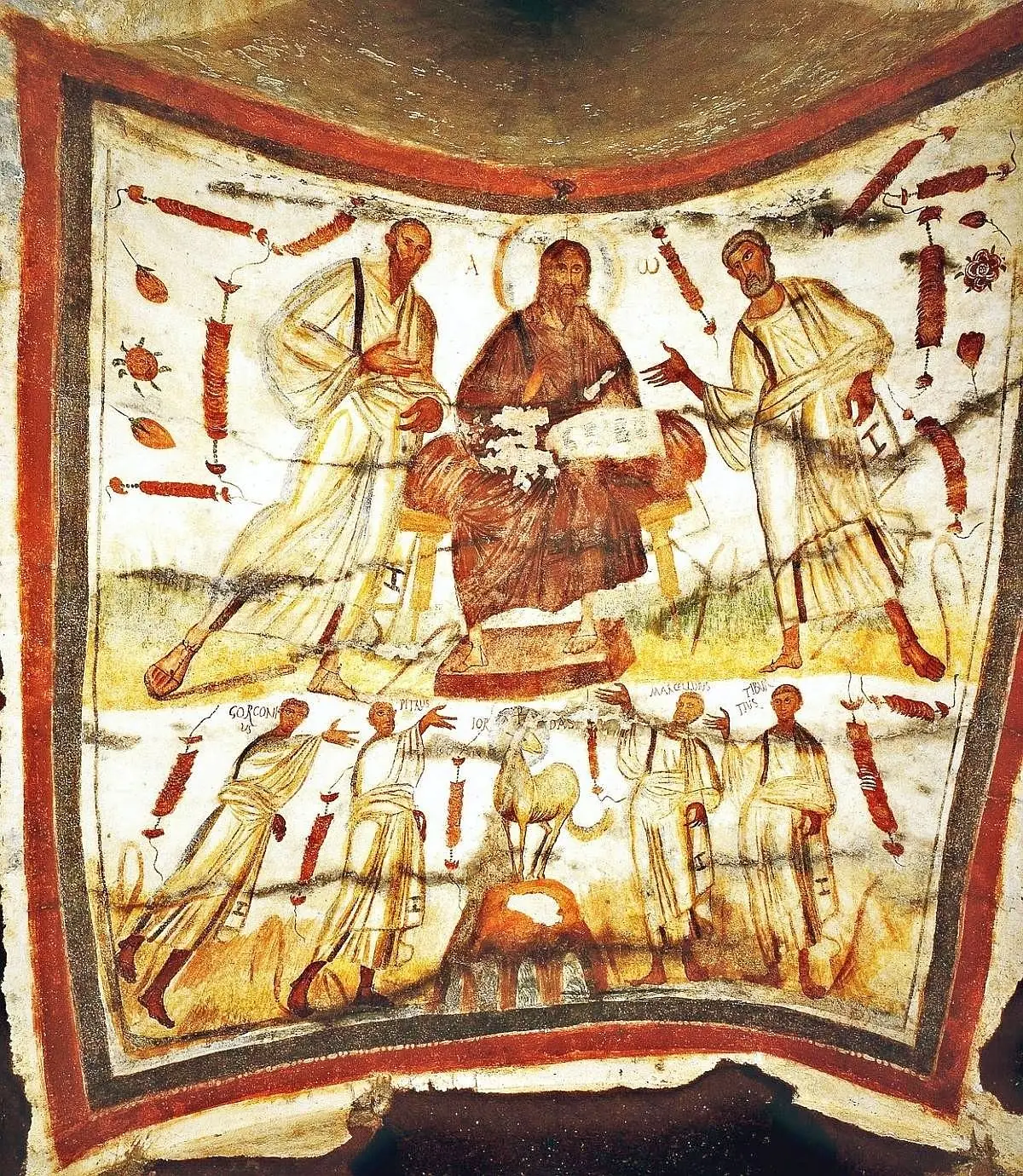
The Qurʾān describes the messengers as men of their own people, sent in the tongue of their people so that the message might be plain.20 ʿĪsā ibn Maryam was sent to the Children of Israel, spoke their tongue and died to the world in their land. Paul was a citizen of the empire that ruled them, took its name, spoke its language when it served, invoked its protection when threatened and appealed to its emperor when tried.
The religion he founded followed the same road, from Islamicjerusalem to Rome, and made its home there. That is the subject of Count·VI.
- Acts 13:7–9 (SBLGNT; KJV). ↩
- Acts 21:37–40 (SBLGNT; KJV). ↩
- Acts 22:25–28 (SBLGNT; KJV). ↩
- Acts 25:11–12 (SBLGNT; KJV). ↩
- See Who was Paul of Tarsus?. ↩
- Acts 13:9; cf. Acts 13:7 for the proconsul. ↩
- Acts 21:37–38. ↩
- Acts 21:40; 22:2. ↩
- Mark 5:41; 7:34; 15:34. See How Paul came to own the New Testament. ↩
- Acts 16:37–39. ↩
- Acts 22:25–29. ↩
- Paul’s father is mentioned in no reliable source; on his citizenship see Who was Paul of Tarsus?, and Robert Eisenman, “Paul as Herodian,” Journal of Higher Criticism 3, no. 1 (1996): 110–122. ↩
- Acts 5:40–41. ↩
- Acts 7:58–8:1. ↩
- Flavius Josephus, Antiquities of the Jews 20.9.1. ↩
- Acts 25:10–12. ↩
- Acts 26:32. ↩
- See The failed prophet. ↩
- Eisenman, op. cit., pp. 115ff.; cf. Romans 13:1–7, treated under The character. ↩
- Sūrah Ibrāhīm 14:4. ↩