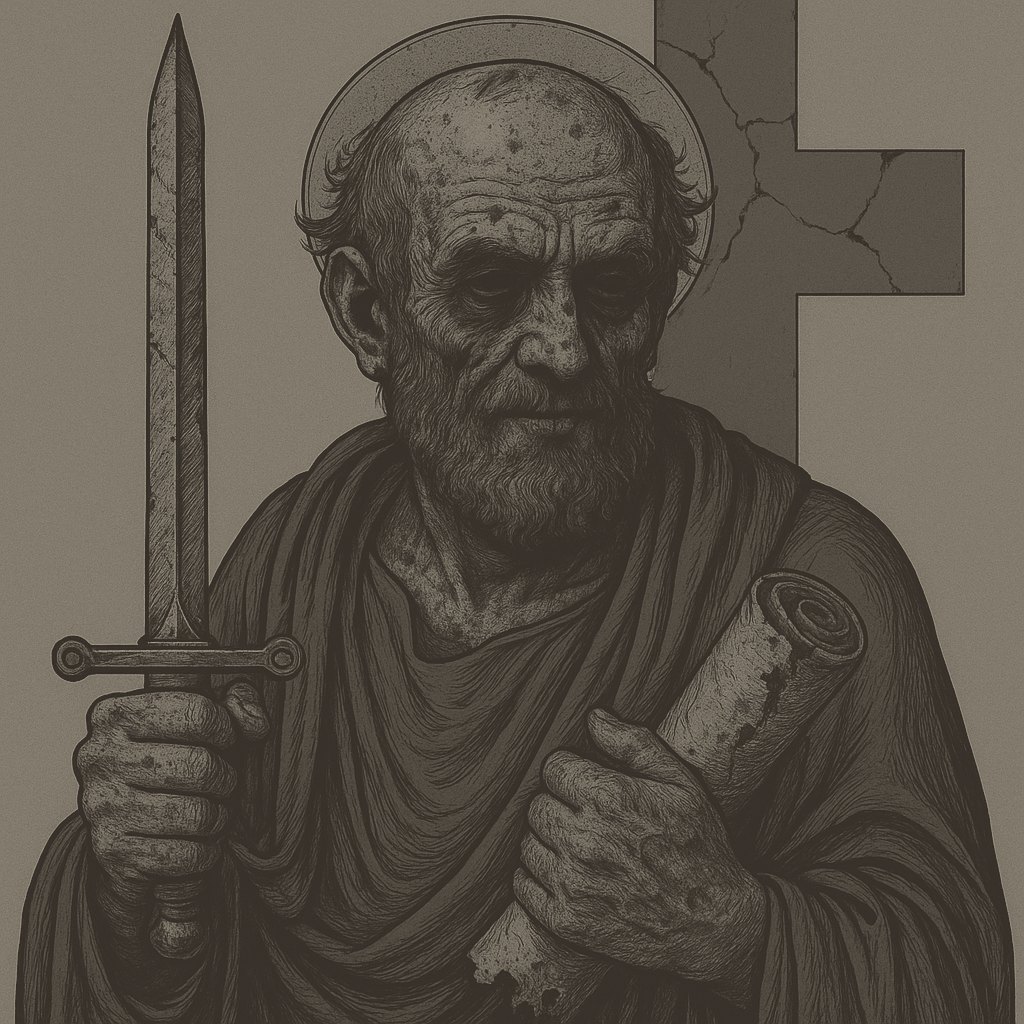
The first witness against Paul was the man with the strongest claim to speak for ʿĪsā ibn Maryam (ʿalayhi al-salām, peace be upon him): his brother James, who led the community in Islamicjerusalem from the departure of ʿĪsā ibn Maryam until his own death in 62. The Jewish followers who kept the law, the Ebionites and Nazarenes, are treated in the first article among the witnesses.5 This article is about the man they followed.
The brother
The gospels name James among the brothers of ʿĪsā ibn Maryam.6 Paul himself calls him “James the Lord’s brother,” and records that on his first visit to Islamicjerusalem after Damascus he saw no apostle except Cephas and James.7 Fourteen years later James was the first of the three pillars, named before Cephas and John, and it was these three who gave Paul the right hand of fellowship.8
9καὶ γνόντες τὴν χάριν τὴν δοθεῖσάν μοι, Ἰάκωβος καὶ Κηφᾶς καὶ Ἰωάννης, οἱ δοκοῦντες στῦλοι εἶναι, δεξιὰς ἔδωκαν ἐμοὶ καὶ Βαρναβᾷ κοινωνίας, ἵνα ἡμεῖς εἰς τὰ ἔθνη, αὐτοὶ δὲ εἰς τὴν περιτομήν·
9And when James, Cephas, and John, who seemed to be pillars, perceived the grace that was given unto me, they gave to me and Barnabas the right hands of fellowship; that we should go unto the heathen, and they unto the circumcision.1
Acts confirms the standing. When Peter was released from prison he sent word to James; when the council met, James delivered the judgment; when Paul returned from his missions, it was to James and the elders that he reported, and James who instructed him.9 The community that had known ʿĪsā ibn Maryam in the flesh was led, after him, by his brother.
The judgment at the council
James’s judgment at the council is the clearest statement of what the original community believed. The Gentiles who turned to God were not to be troubled with circumcision, but were to abstain from idols, from fornication, from things strangled and from blood; and Moses, he added, has in every city those who preach him, being read in the synagogues every sabbath.10
19διὸ ἐγὼ κρίνω μὴ παρενοχλεῖν τοῖς ἀπὸ τῶν ἐθνῶν ἐπιστρέφουσιν ἐπὶ τὸν θεόν, 20ἀλλὰ ἐπιστεῖλαι αὐτοῖς τοῦ ἀπέχεσθαι τῶν ἀλισγημάτων τῶν εἰδώλων καὶ τῆς πορνείας καὶ τοῦ πνικτοῦ καὶ τοῦ αἵματος· 21Μωϋσῆς γὰρ ἐκ γενεῶν ἀρχαίων κατὰ πόλιν τοὺς κηρύσσοντας αὐτὸν ἔχει ἐν ταῖς συναγωγαῖς κατὰ πᾶν σάββατον ἀναγινωσκόμενος.
19Wherefore my sentence is, that we trouble not them, which from among the Gentiles are turned to God: 20But that we write unto them, that they abstain from pollutions of idols, and from fornication, and from things strangled, and from blood. 21For Moses of old time hath in every city them that preach him, being read in the synagogues every sabbath day.2
The ruling kept the law. It admitted Gentiles on the terms the Torah itself set for the stranger within the gates, and it assumed that the law of Mūsā would go on being read.11 Paul’s later teaching that Christ is the end of the law was a departure from the judgment of the man who presided over the council he attended.12
Faith without works
The epistle that bears James’s name answers Paul’s doctrine of justification by faith in Paul’s own terms. What does it profit, it asks, if a man says he has faith and has not works? Faith without works is dead.
Abraham was justified by works when he offered Isaac. “Ye see then how that by works a man is justified, and not by faith only.”13
17οὕτως καὶ ἡ πίστις, ἐὰν μὴ ἔχῃ ἔργα, νεκρά ἐστιν καθʼ ἑαυτήν. 18Ἀλλʼ ἐρεῖ τις· Σὺ πίστιν ἔχεις κἀγὼ ἔργα ἔχω. δεῖξόν μοι τὴν πίστιν σου χωρὶς τῶν ἔργων, κἀγώ σοι δείξω ἐκ τῶν ἔργων μου τὴν πίστιν.
17Even so faith, if it hath not works, is dead, being alone. 18Yea, a man may say, Thou hast faith, and I have works: shew me thy faith without thy works, and I will shew thee my faith by my works.3
24ὁρᾶτε ὅτι ἐξ ἔργων δικαιοῦται ἄνθρωπος καὶ οὐκ ἐκ πίστεως μόνον.
24Ye see then how that by works a man is justified, and not by faith only.4
The two texts use the same example, Abraham, and the same verse of Genesis, and reach opposite conclusions.14 Martin Luther, who built the Reformation on Paul’s reading, called James “really an epistle of straw” for that reason, and withdrew the remark from later editions of his Bible without withdrawing the preference.15
The Islamic position needs no such choice. The Qurʾān joins faith and righteous deeds in a single phrase again and again, and ʿĪsā ibn Maryam, in the gospel Paul did not quote, told the rich young man to sell what he had and give to the poor.16
The death of the brother
James died in 62. Josephus records that the high priest Ananus, in the interval between two Roman governors, assembled the Sanhedrin and brought before it “the brother of Jesus, who was called Christ, whose name was James,” with certain others, and delivered them to be stoned.17 The fairest citizens of the city protested to the incoming governor, and Ananus was deposed for the act.
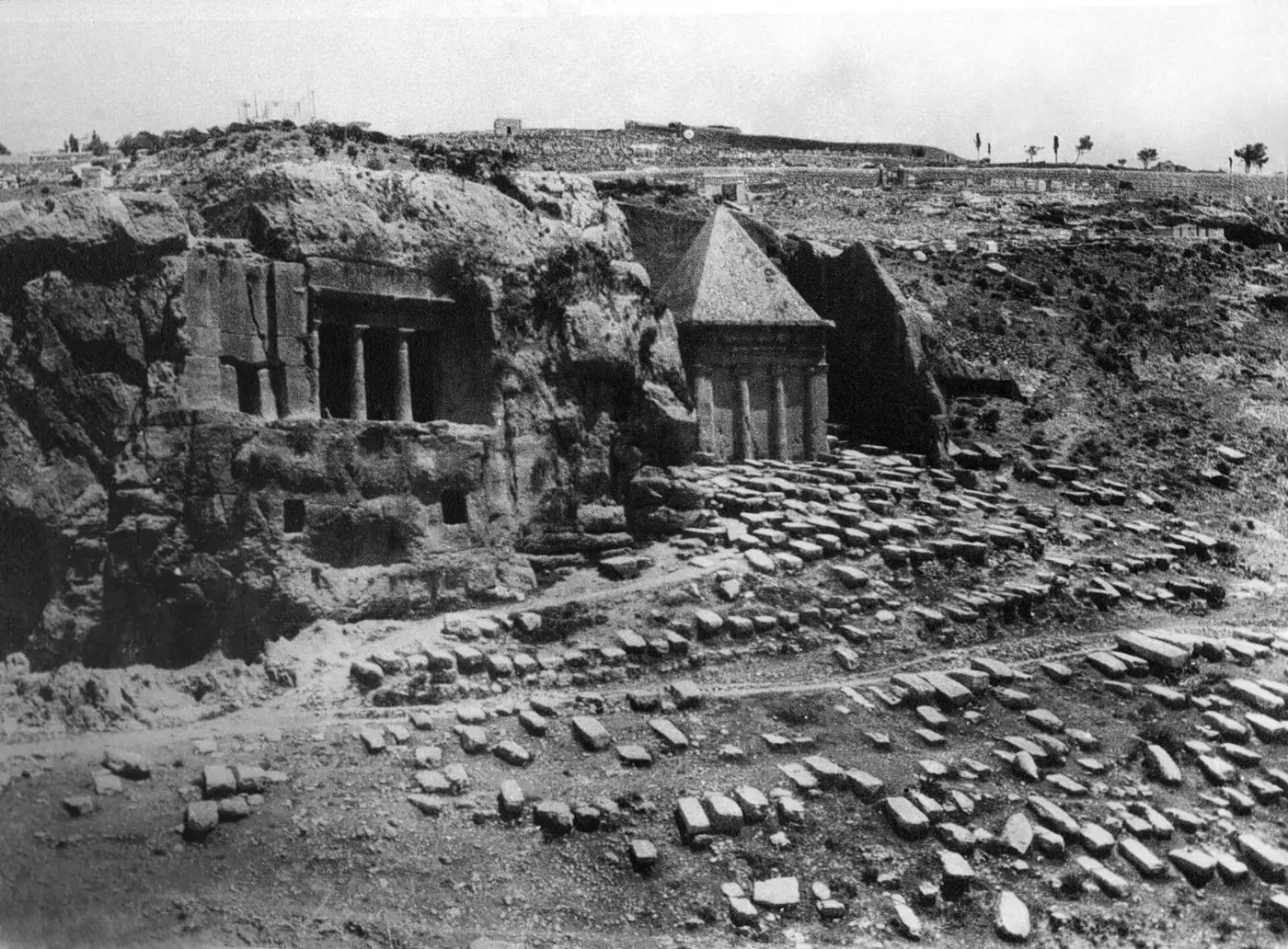
Josephus, a Jew with no interest in the sect, calls James the brother of Jesus and records that his death was resented by the just. No such notice survives for Paul. The man who led the community of ʿĪsā ibn Maryam for thirty years died in Islamicjerusalem at the hands of the Sanhedrin; the man who claimed to have superseded him appealed to Caesar and died, by the church’s own tradition, in Rome.18
The witness effaced
Within a generation of his death the church that Paul’s letters had shaped had no place for James. His epistle entered the canon late and under suspicion; his community, scattered after 70, was recorded by the church fathers only as heresy.19 Robert Eisenman’s study of James argues that the church’s memory of him was deliberately reduced so that Paul’s could grow.20
The Qurʾān keeps the memory that the church lost: the disciples of ʿĪsā ibn Maryam, the ḥawāriyyūn (الحواريون, “the disciples”), who said, “We are the supporters of God.”21 James was their head.
- Galatians 2:9 (SBLGNT; KJV). ↩
- Acts 15:19–21 (SBLGNT; KJV). ↩
- James 2:17–18 (SBLGNT; KJV). ↩
- James 2:24 (SBLGNT; KJV). ↩
- See The first witnesses against Paul. ↩
- Matthew 13:55; Mark 6:3. ↩
- Galatians 1:18–19. ↩
- Galatians 2:9. ↩
- Acts 12:17; 15:13–21; 21:18–25. ↩
- Acts 15:19–21. ↩
- cf. Leviticus 17–18, the laws for the stranger, which the four prohibitions follow. ↩
- Romans 10:4. See The Jerusalem Council and the parting with Barnabas. ↩
- James 2:14–24. Paul’s contrary statement is Romans 3:28; see How Paul came to own the New Testament. ↩
- Genesis 15:6, quoted at Romans 4:3 and at James 2:23. ↩
- Martin Luther, “Preface to the New Testament” (1522), in Luther’s Works, vol. 35 (Philadelphia: Fortress Press, 1960), p. 362. The sentence was dropped from editions after 1537. ↩
- Matthew 19:21. See Seven doctrines. ↩
- Flavius Josephus, Antiquities of the Jews 20.9.1. ↩
- See The Roman: name, tongue and citizenship and The failed prophet. ↩
- See The first witnesses against Paul. ↩
- Robert Eisenman, James the Brother of Jesus (London: Penguin Books, 1997), introduction. ↩
- Sūrah al-Ṣaff 61:14. ↩